Malé to Yogyakarta: Five Countries, One Border Crossed on Foot, No Tour Bus in Fourteen Days
I ran this exact loop in April 2025. These are the speedboats I sat in, the minibus-then-taxi-then-walk across the Brunei–Malaysia border, and the overland crossing from Timor-Leste into Indonesian West Timor that most travelers never attempt in either direction. I have spent 25 years learning how to travel well for less in 154 countries. This is that playbook applied to a route most people assume needs five separate trips.
It doesn’t. This plan strings together the Maldives, Brunei, Malaysian Borneo, Bali, Timor-Leste, and Java into one fourteen-day loop, using budget flights, a speedboat, a public bus, and two land borders that no escorted tour touches — because no escorted tour covering this exact combination exists. The catch, as always: you book each leg yourself. This page removes most of that work.
Who this trip is for
I want to be honest about this one before you book anything: it is the most logistically dense plan on this site. In fourteen days you take seven flights, one long-distance train, one speedboat, and cross two land borders — one on foot across a stretch of no-man’s-land between Brunei and Malaysia, the other overland from Timor-Leste into Indonesia, an island literally split between two countries. None of it is difficult on its own, but stacked together it asks more of you than a single-country trip. If this would be your first solo international loop, start with something smaller and come back to this one.
Physically, the demands are moderate but real: a full travel day on local buses and taxis for each border crossing, a 4:30 AM start for the Timor-Leste bus, long single days on foot at Borobudur and Prambanan, and several one-night hotel stays that mean packing and unpacking often. Nothing requires technical fitness or long hikes.
One honest note on Timor-Leste: it is one of the world’s youngest countries, independent only since 2002, and its tourist infrastructure is thin — limited ATMs, patchy WiFi, and English spoken less widely than in Bali or Malaysia. I found it safe, welcoming, and worth every hour of the extra planning it takes. Check the US State Department travel advisory for Timor-Leste before you book, as with any less-visited destination.
When to go
I went in the second half of April, at the tail end of the regional dry season, and had good weather everywhere except a few short downpours in Yogyakarta. Roughly November through April is dry season across the Maldives, Brunei, Bali, and Java; Timor-Leste’s dry season runs a little longer, into May. Avoid the mid-year monsoon months if you can. Both Brunei and parts of Indonesia are Muslim-majority, so check Ramadan dates before you book — restaurant hours and bus schedules both shift, and the dates move every year.
The route at a glance
US gateway → Malé, Maldives → Dhigurah (South Ari Atoll) → Kuala Lumpur (transit) → Bandar Seri Begawan, Brunei → overland border crossing to Miri, Malaysian Borneo → Kuala Lumpur (transit) → Denpasar, Bali → Dili, Timor-Leste → overland border crossing to Kupang, West Timor → Jakarta → Yogyakarta (by train) → Borobudur → Prambanan → Kuala Lumpur → home.
The shape works because Kuala Lumpur, AirAsia’s home hub, ties together three otherwise-unconnected legs without ever becoming a destination in its own right — you pass through it three times, always same-day or overnight. The two overland border crossings are the signature logistics feat of this route: genuinely rare experiences most travelers, guided or independent, never attempt. No city is revisited for a second overnight stay, and every connection is bookable within a few weeks of travel.
Day by day
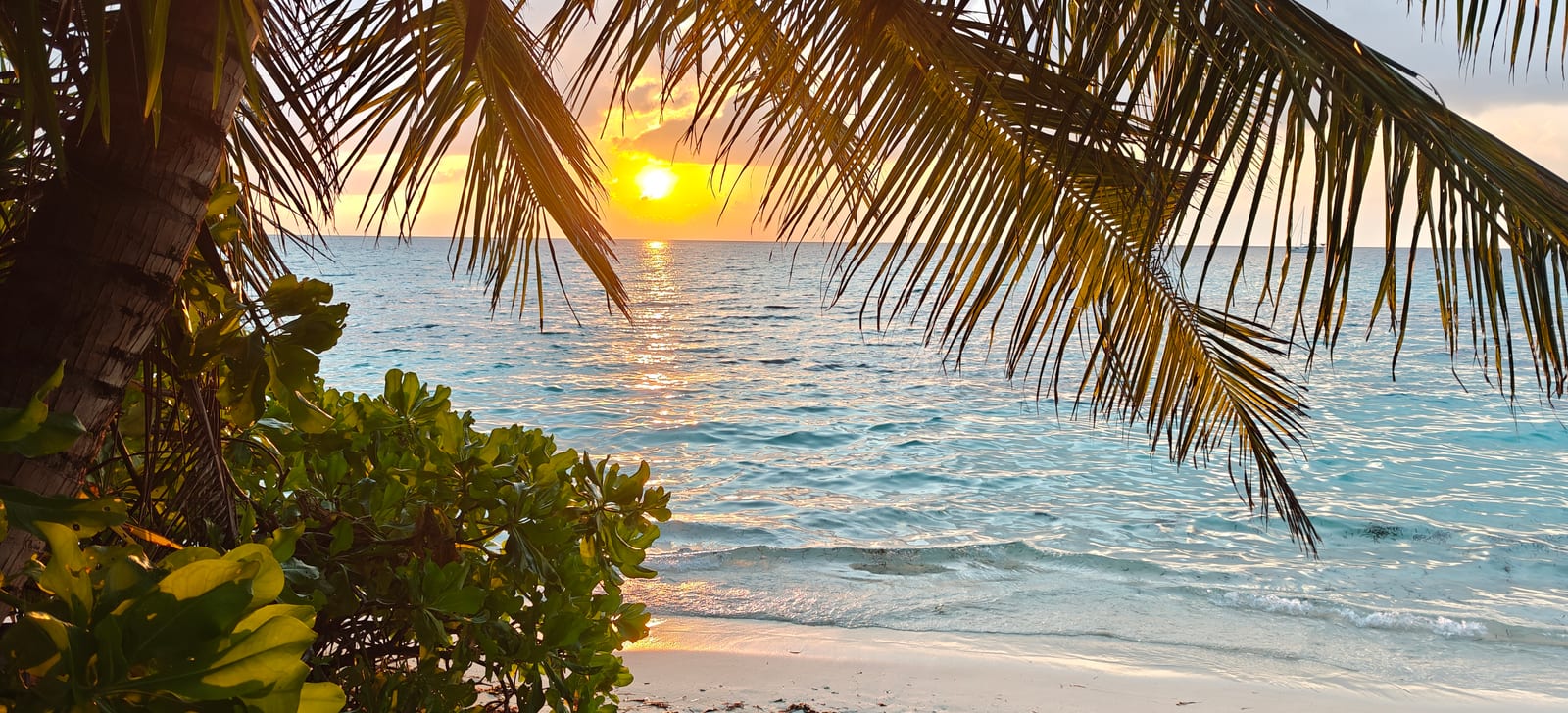
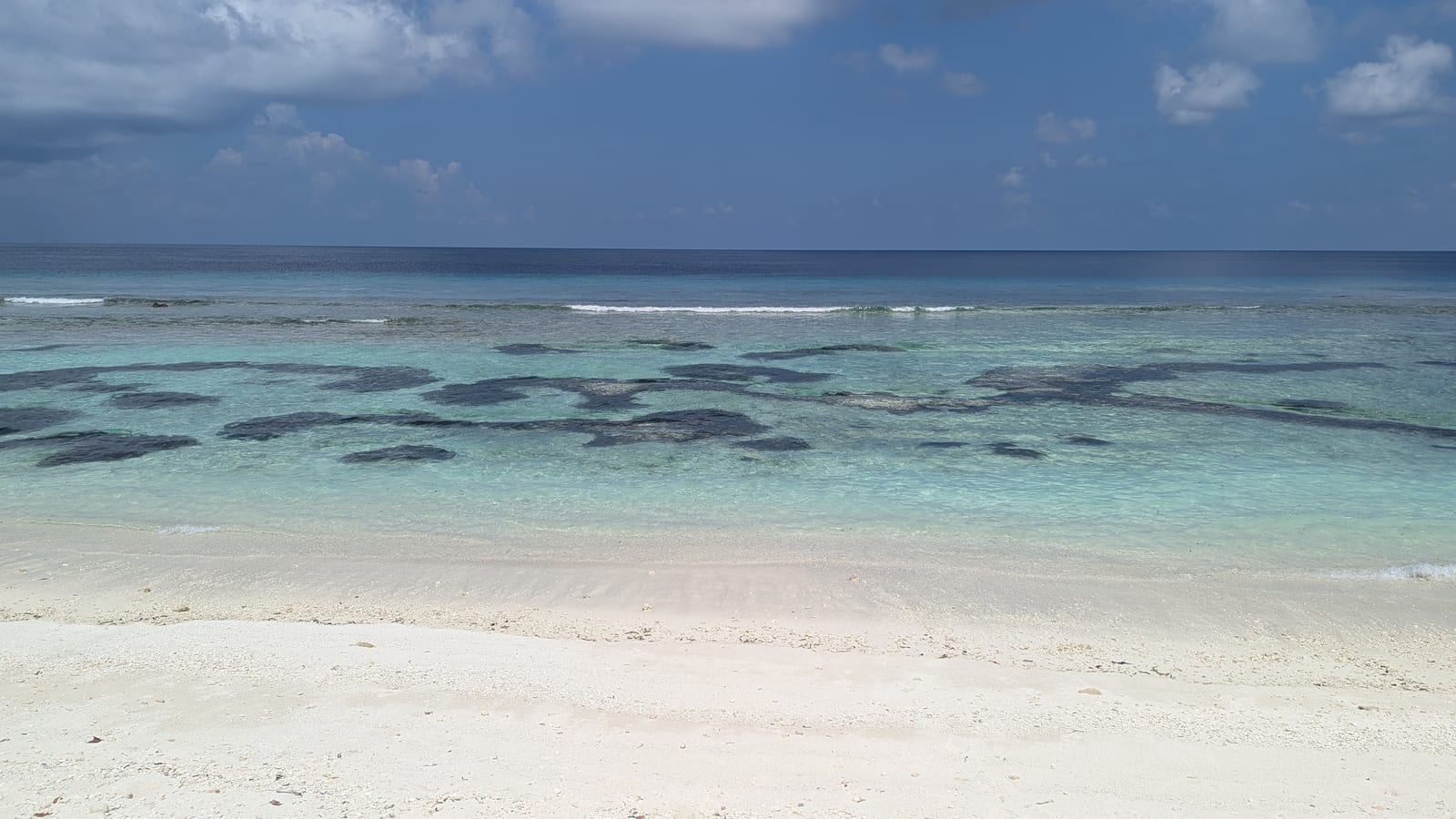
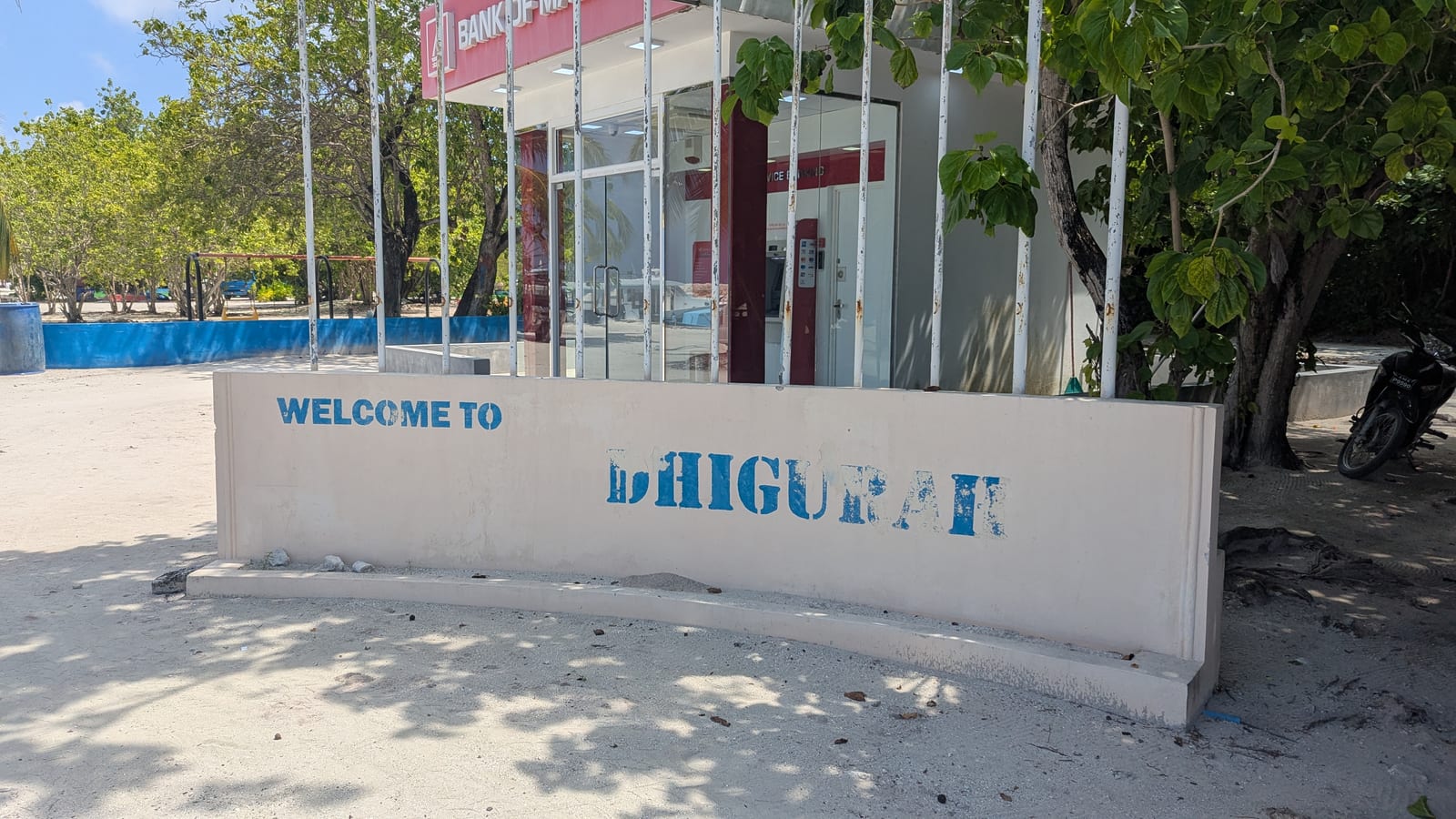
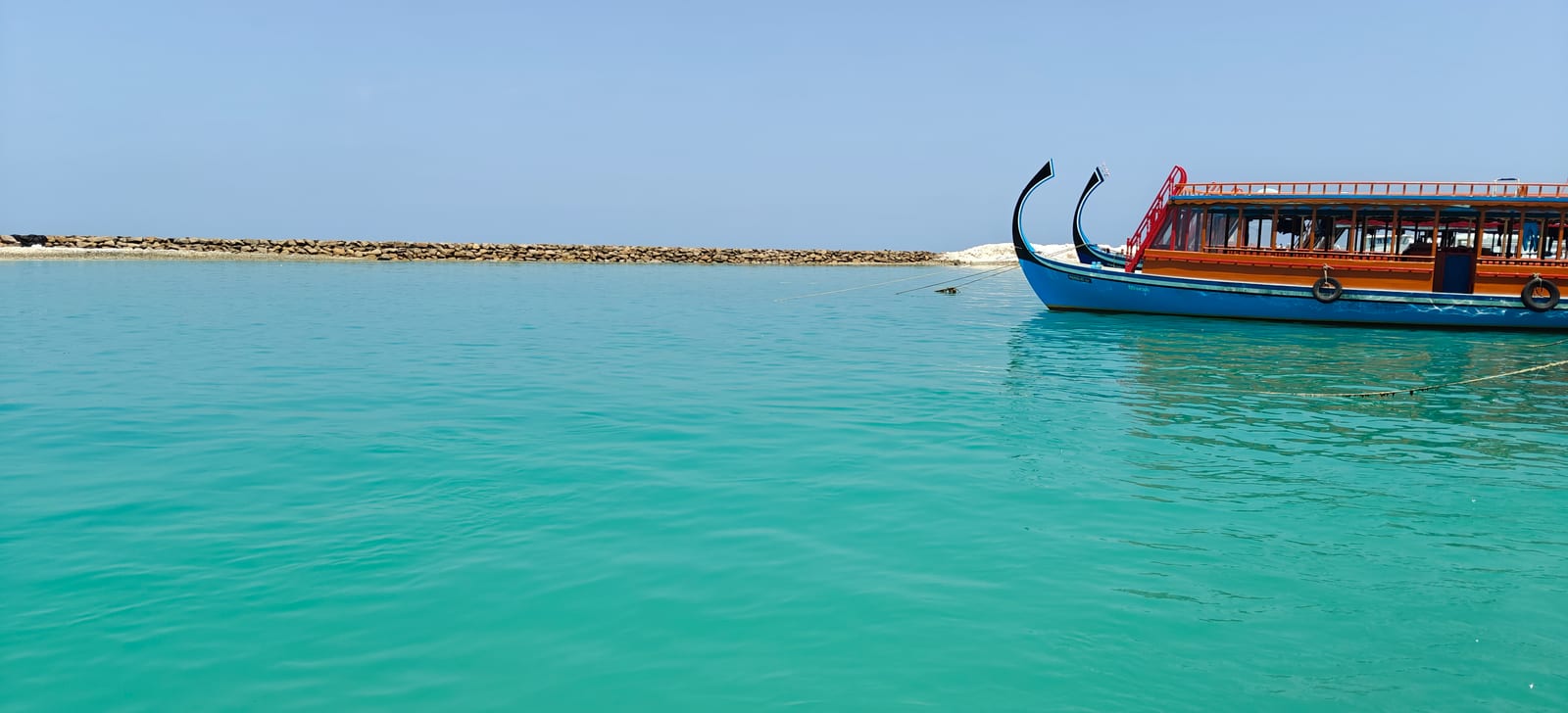
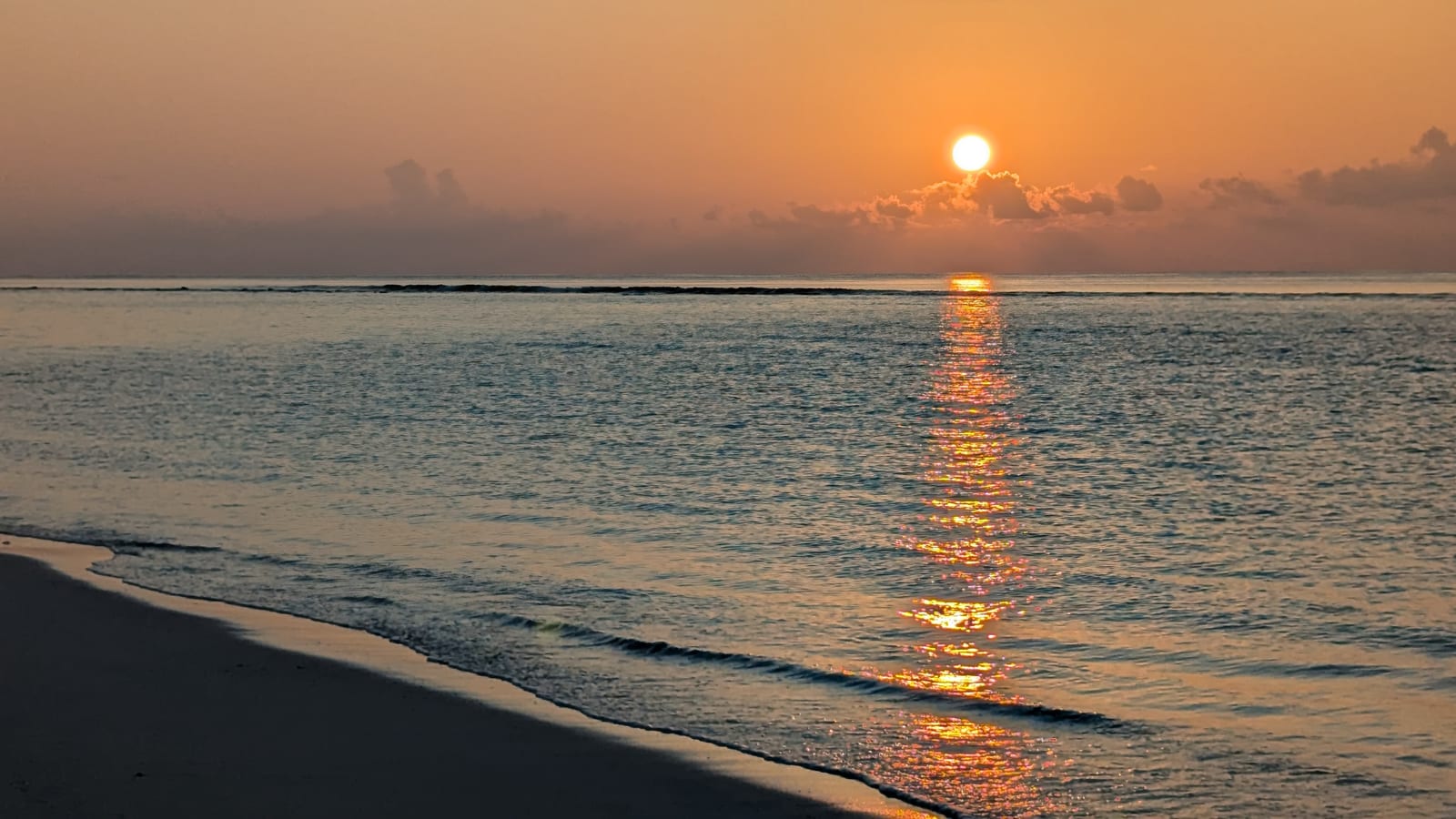
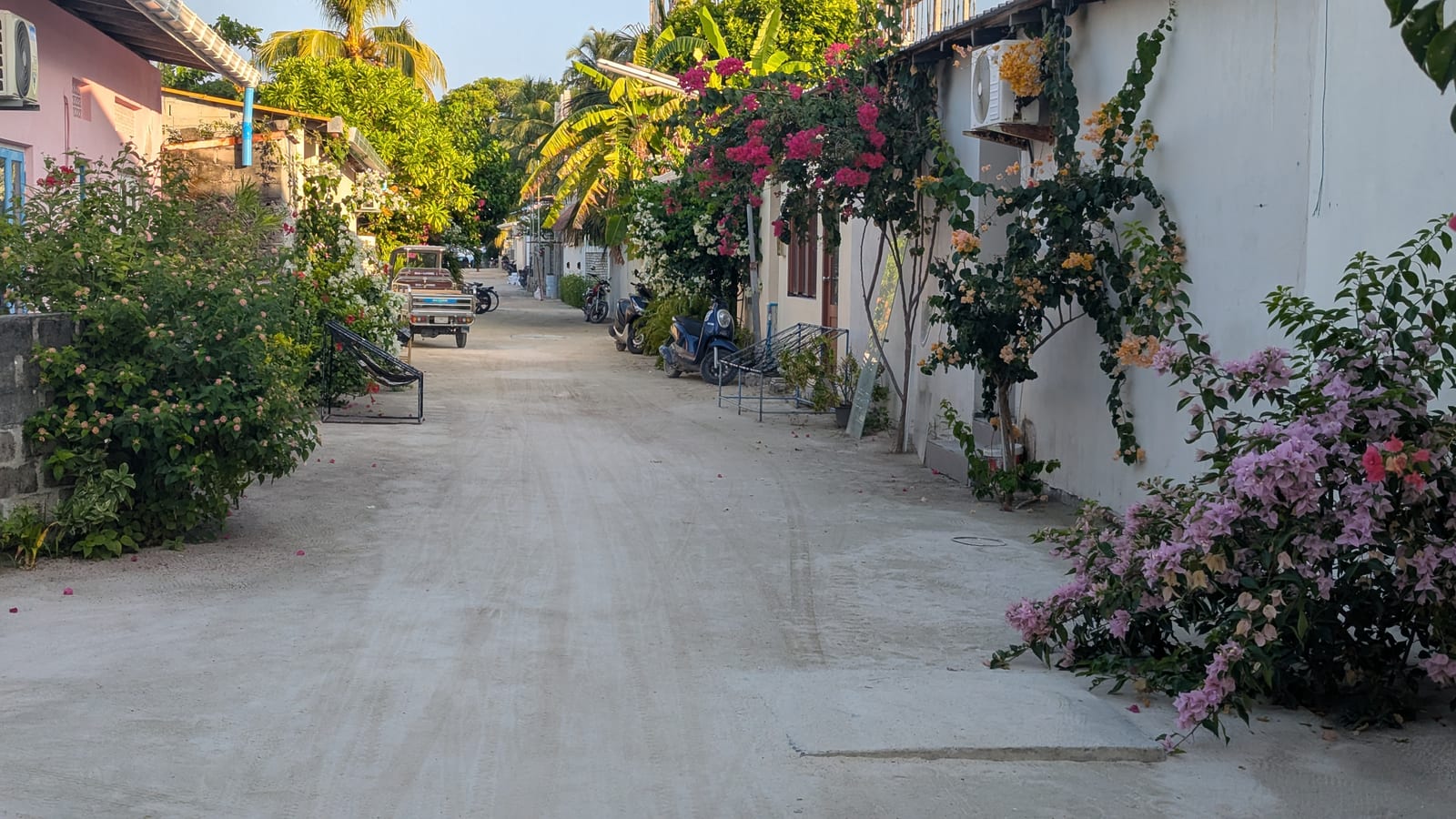
Day 1 — Fly to Malé, transfer to Dhigurah. There is no realistic one-stop routing from the US to the Maldives; plan on a long-haul to Dubai, Doha, or Singapore and a connection into Velana International Airport (MLE). Skip Malé itself and head straight for a local island — Atoll Transfer’s airport counter, a short walk from the arrivals gate, runs scheduled speedboats out to the atolls. I went to Dhigurah in South Ari Atoll, about two hours out, and checked into The Wave Dhigurah, a simple guesthouse on the island’s one real street. Local islands are Muslim and modest-dress-observant outside the designated bikini beach — pack accordingly.
Day 2 — Dhigurah. This is the slow day, and the whole reason to route the Maldives this way: a local-island guesthouse costs a fraction of a resort and still puts you steps from South Ari Atoll’s whale shark territory, snorkelable straight off the beach in season. Spend it swimming, snorkeling, or booking a half-day boat trip through your guesthouse. In the evening, take the return speedboat or public ferry back to Malé to connect with a late flight onward — the schedules are built around exactly this handoff.
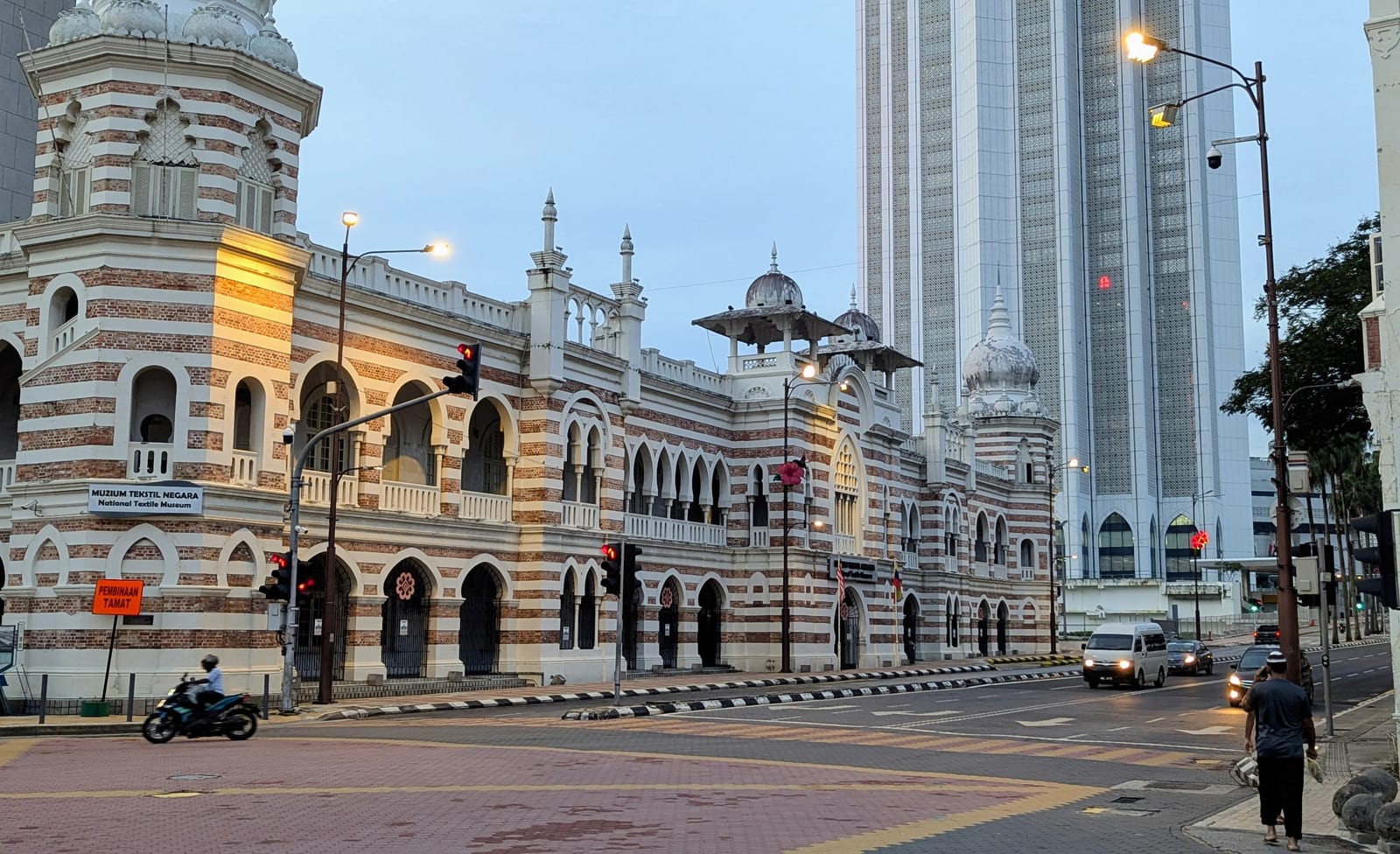
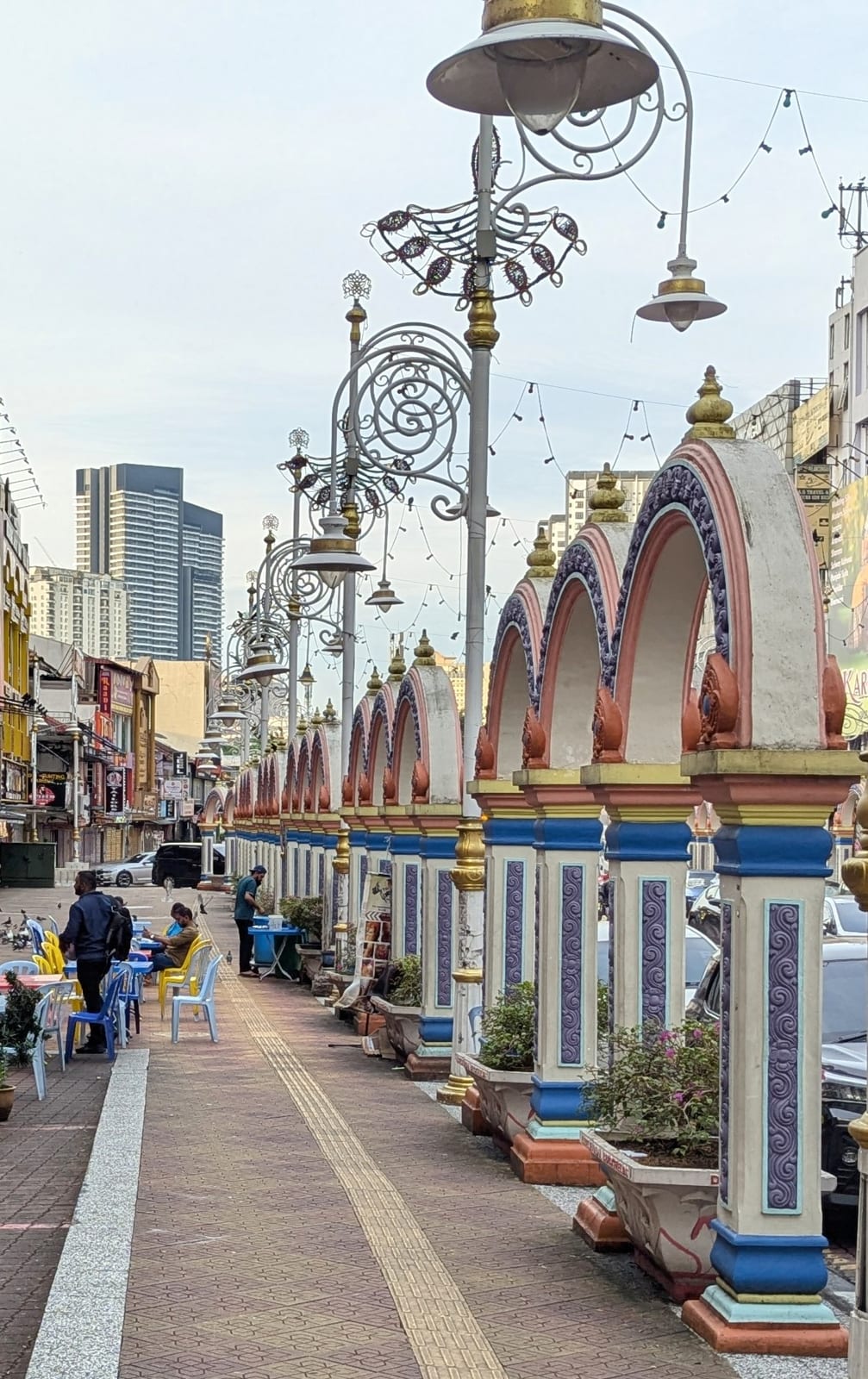
Day 3 — Overnight flight to Kuala Lumpur, then on to Brunei. AirAsia’s Malé–Kuala Lumpur route is a red-eye that lands before dawn with a long layover — use it. Clear immigration, take the KLIA Ekspres train or a Grab into the city, and eat a proper meal in Brickfields, KL’s Little India, before heading back for an early-afternoon flight to Bandar Seri Begawan, Brunei. A public bus (about BND 1, every 20 to 30 minutes) covers the 15-minute run from Brunei’s airport into downtown. Two nights at Capital Residence Suites, which will arrange airport pickup if you call ahead.
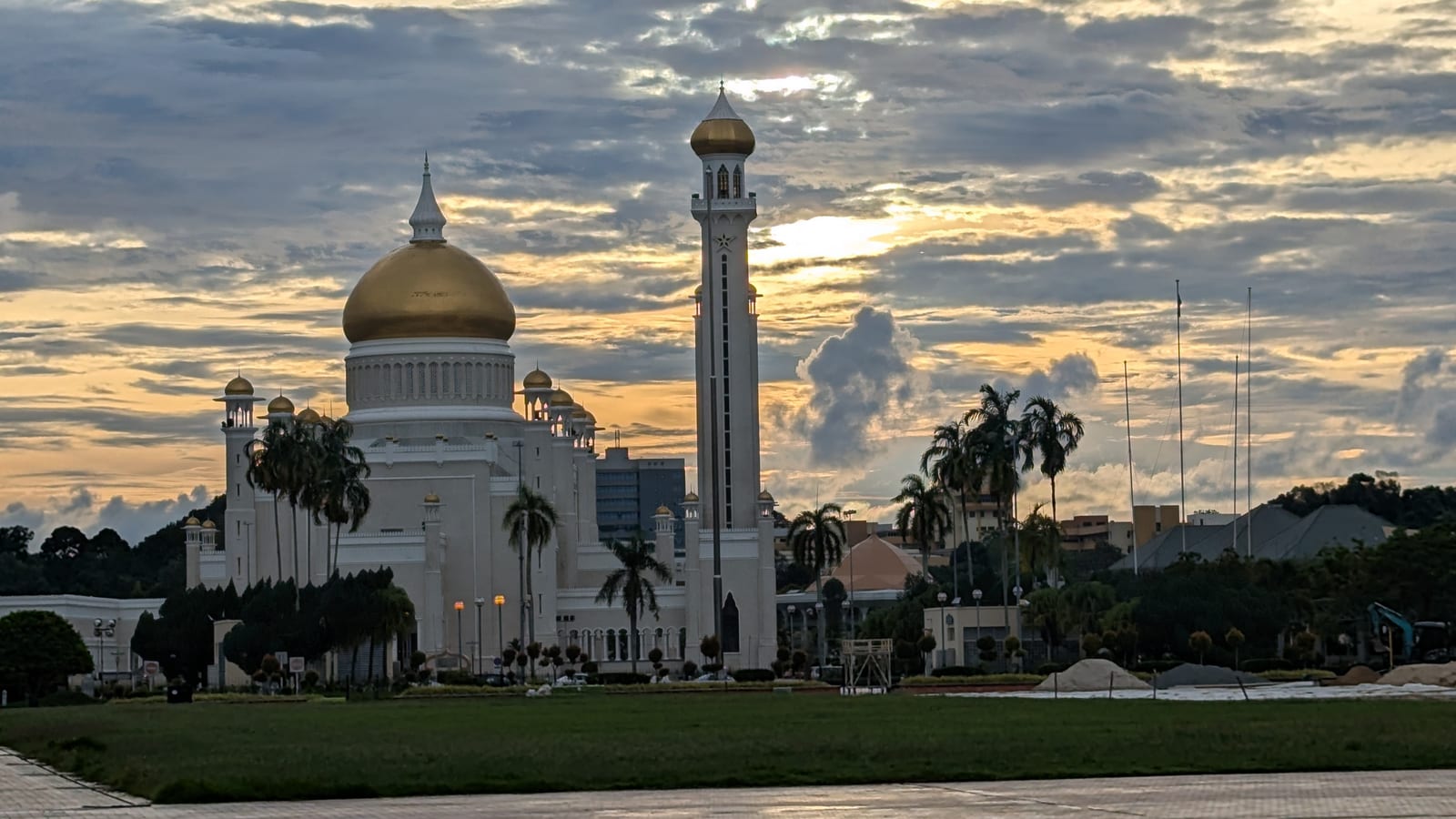
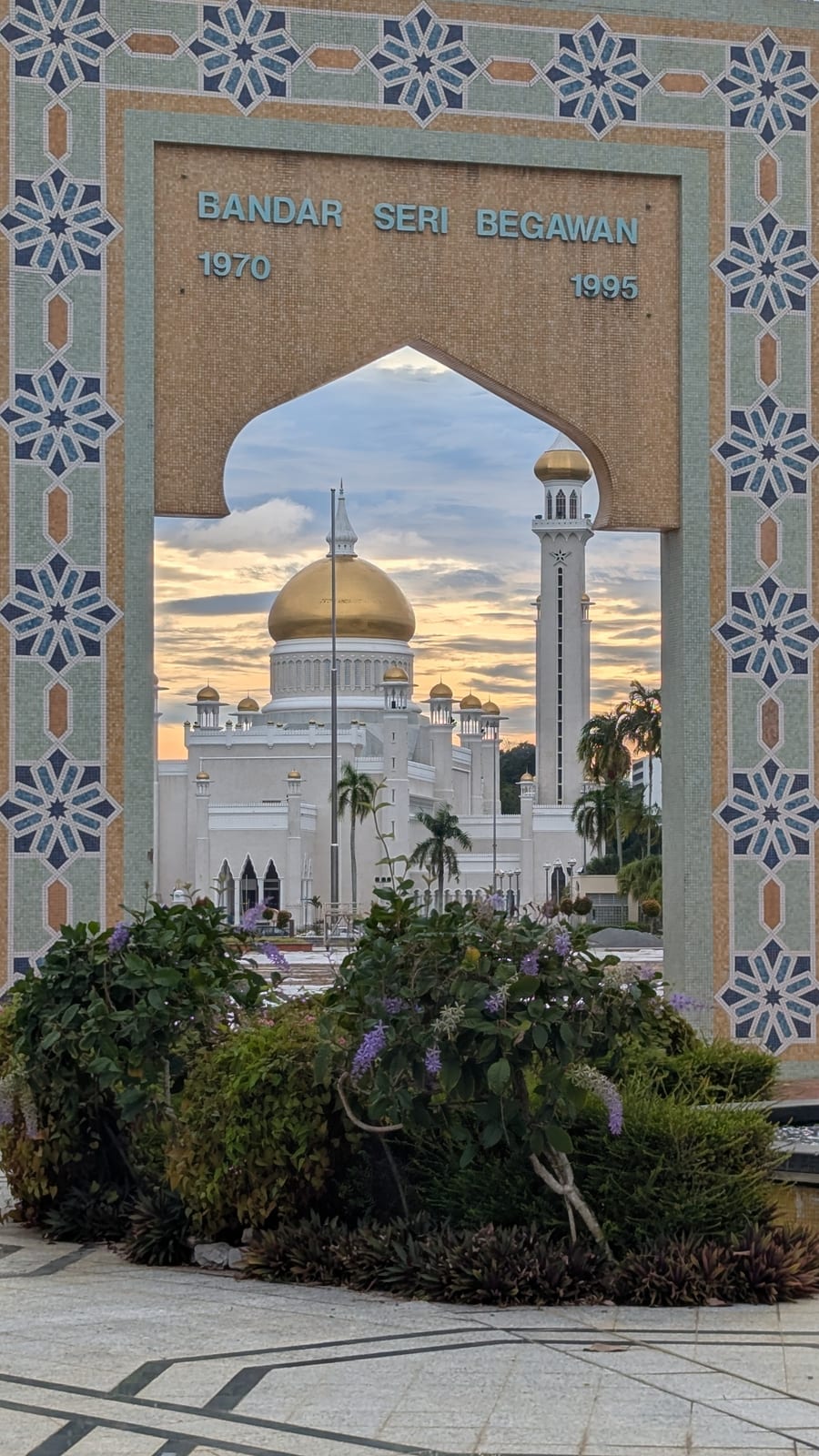
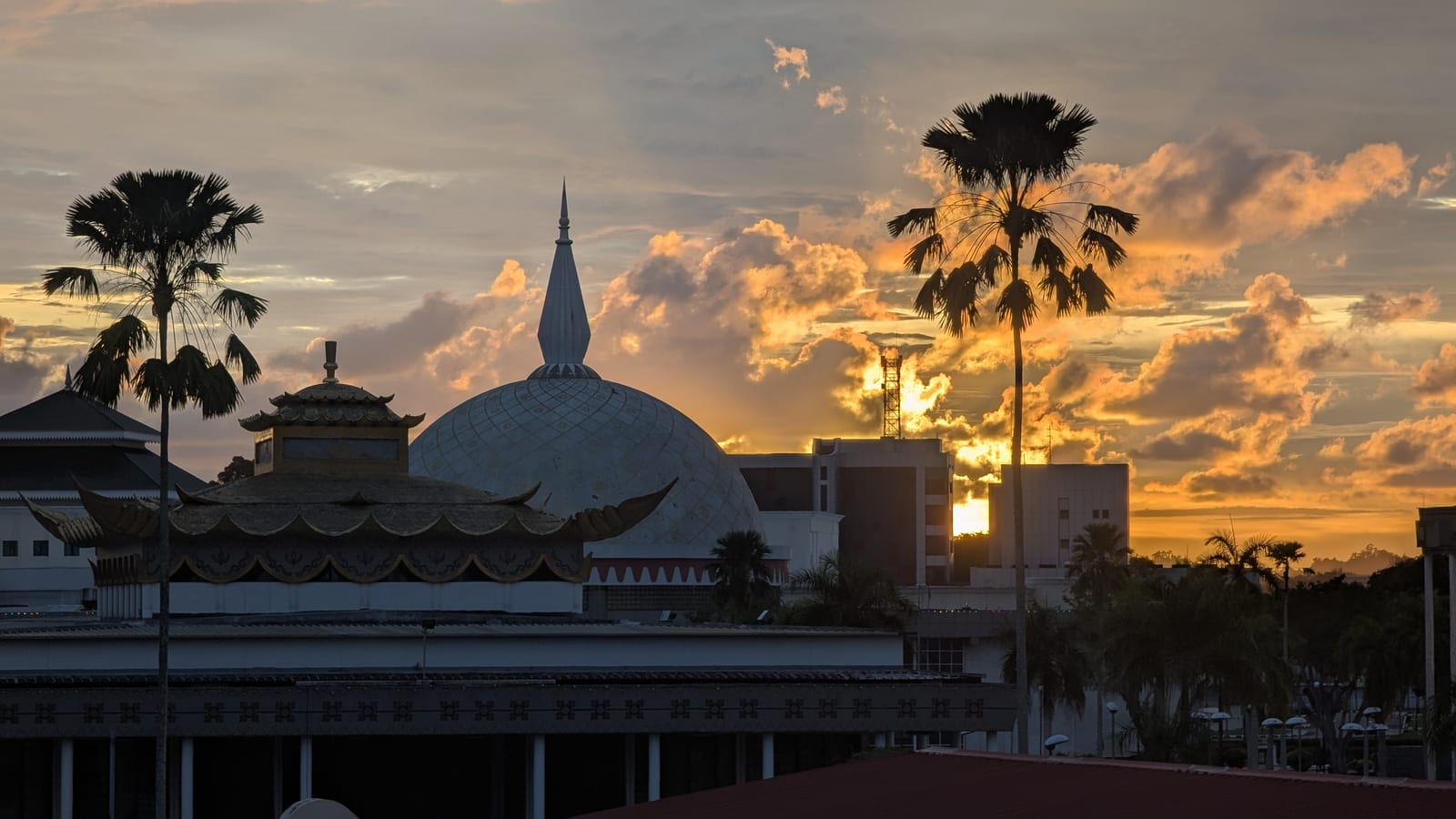
Day 4 — Bandar Seri Begawan. Brunei is the least-visited stop on this loop and one of the most memorable, largely because its best sight is free. Kampong Ayer, the “Venice of the East,” is a thousand-year-old stilt settlement on the Brunei River housing thousands of people in wooden houses connected by boardwalks, complete with its own schools, mosques, and a police station. A water taxi (agree the fare before boarding, a few dollars) gets you out onto the water for the full effect. Round out the day at the gold-domed Sultan Omar Ali Saifuddien Mosque and the Royal Regalia Museum, both free to enter.
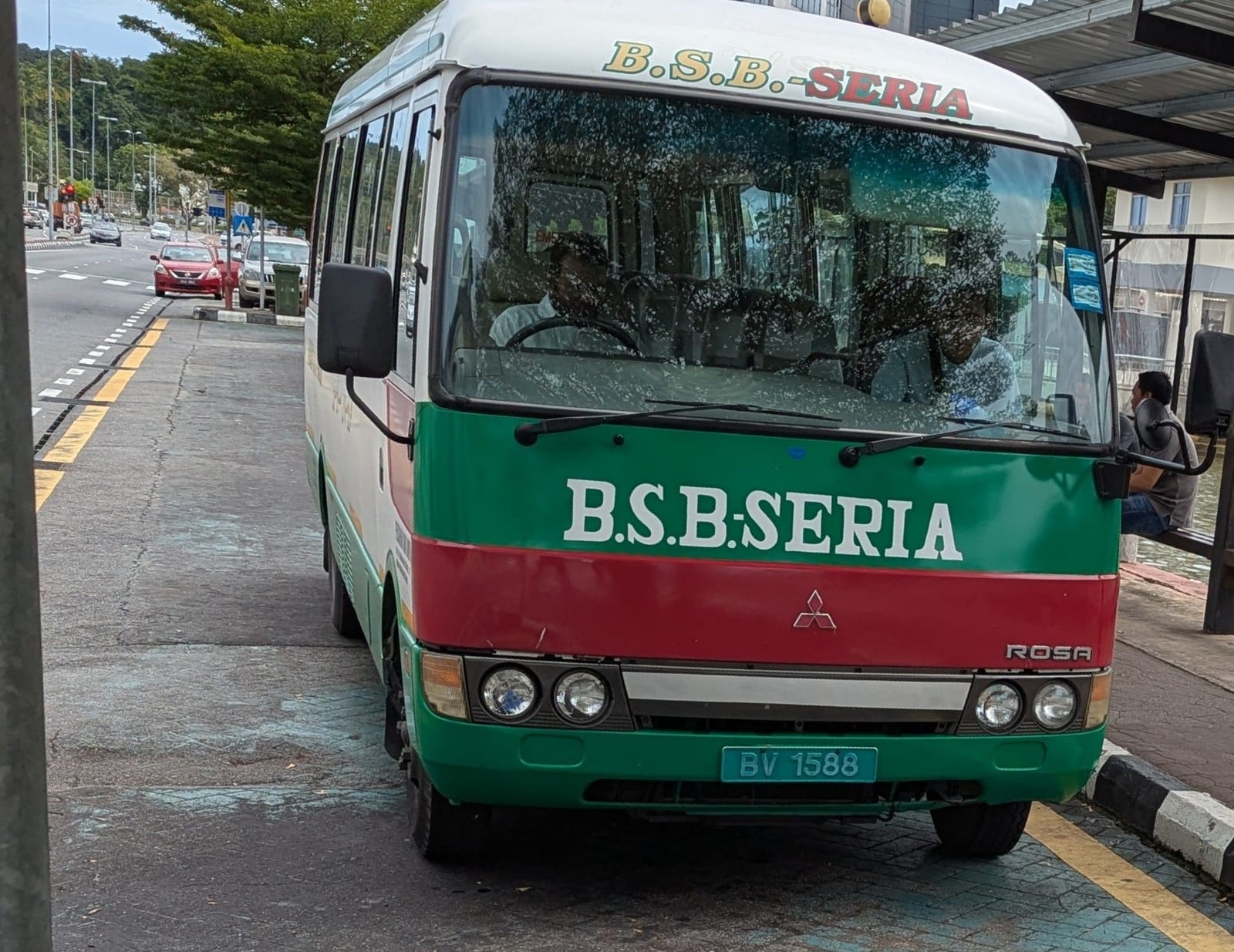
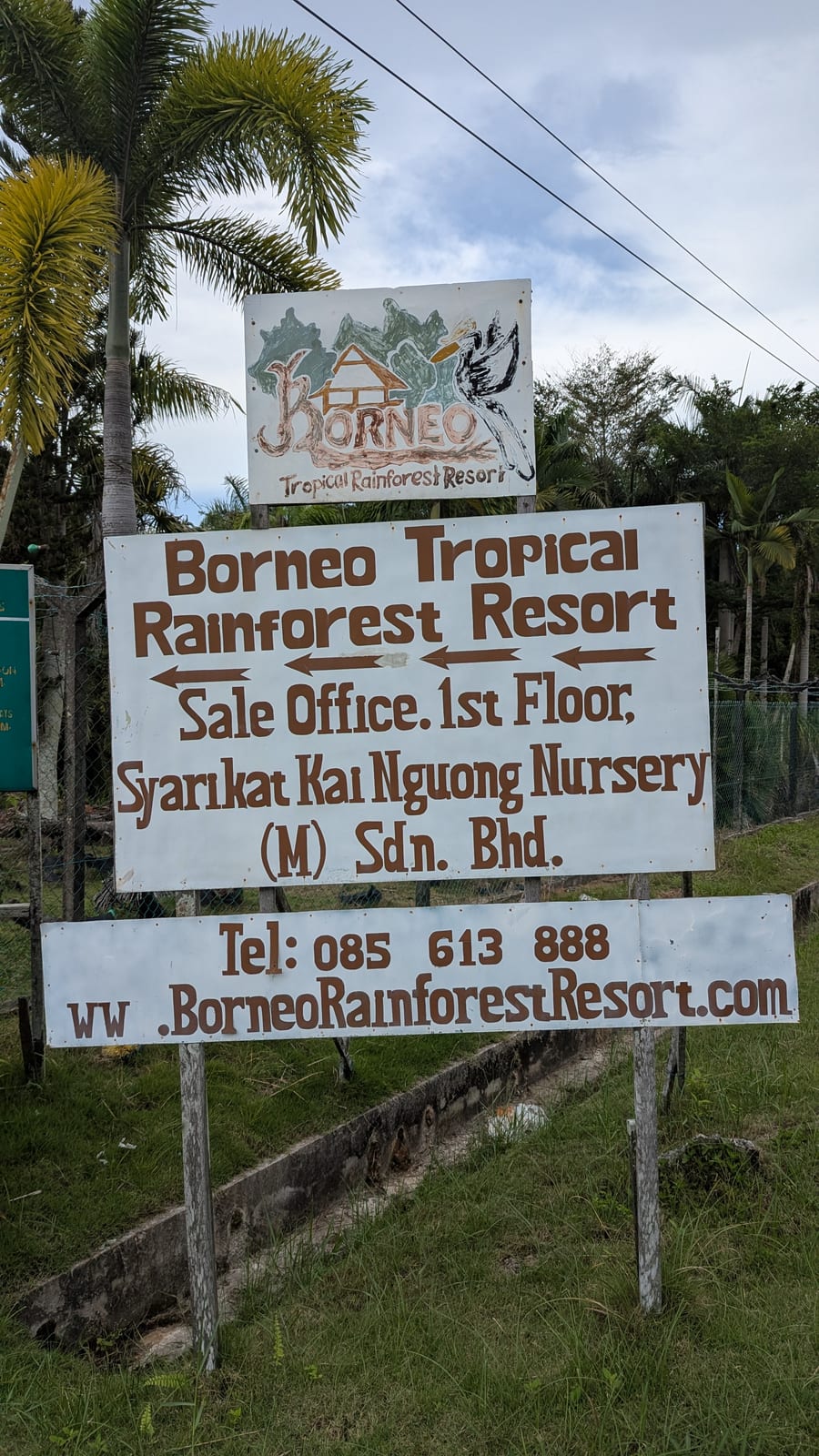
Day 5 — Overland to Malaysian Borneo. Brunei to Miri is one of the last genuinely interesting land borders left in Southeast Asia, and no single bus does it in one seat: a local minibus from downtown BSB to Seria (about BND 6, first departure 6 AM), a second local bus on to Kuala Belait (BND 1), then a taxi or shared car to the border itself (roughly BND 20). Clear Bruneian exit immigration, then walk across a stretch of no-man’s-land on foot to Malaysian immigration — one of the few borders left anywhere that you cross on foot rather than by vehicle. Once stamped in, a Grab from the Malaysian side covers the final stretch into Miri, Sarawak. Start early: this whole chain runs on daylight and mostly stops working by late afternoon. Overnight near the center of Miri.
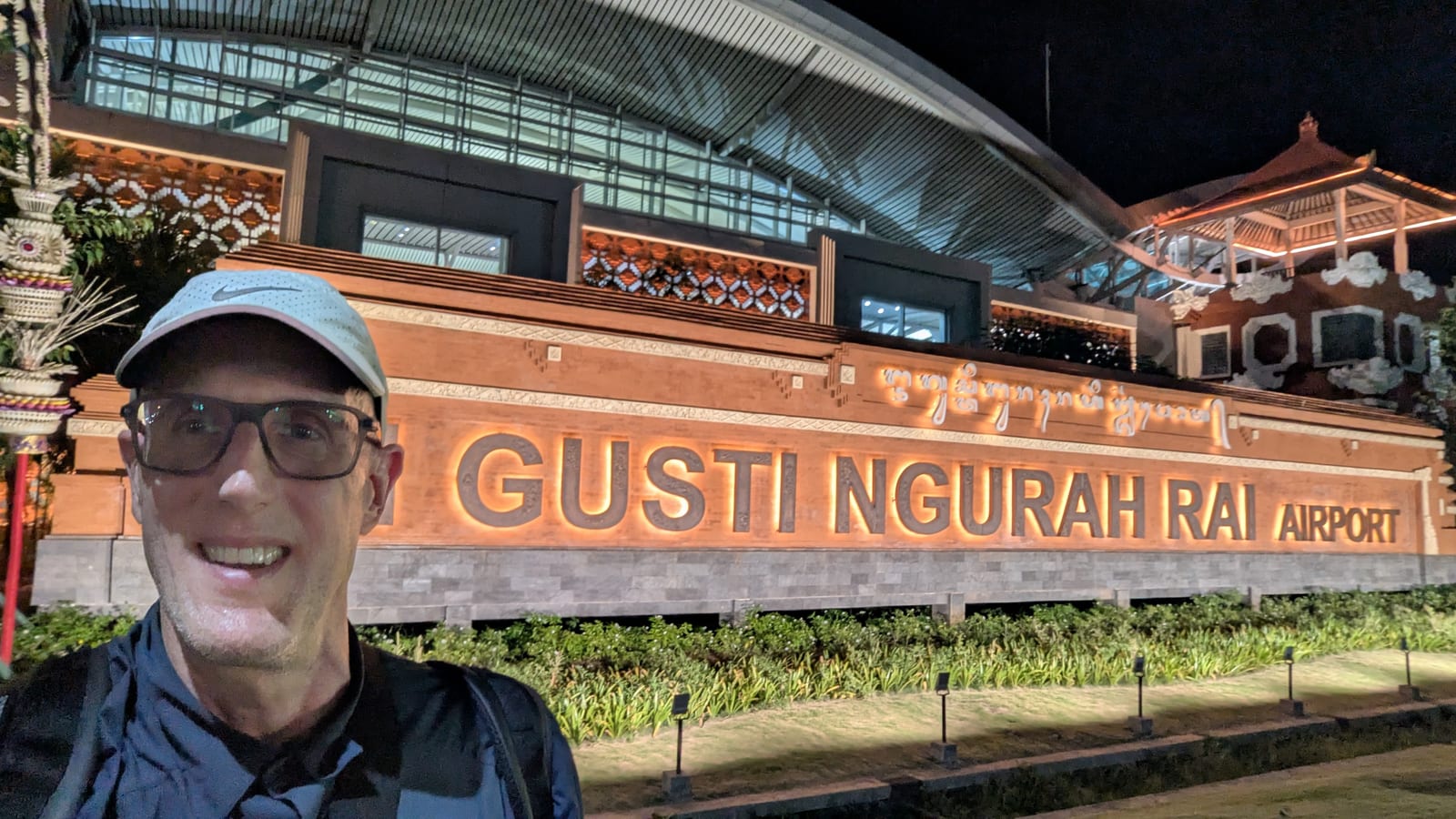
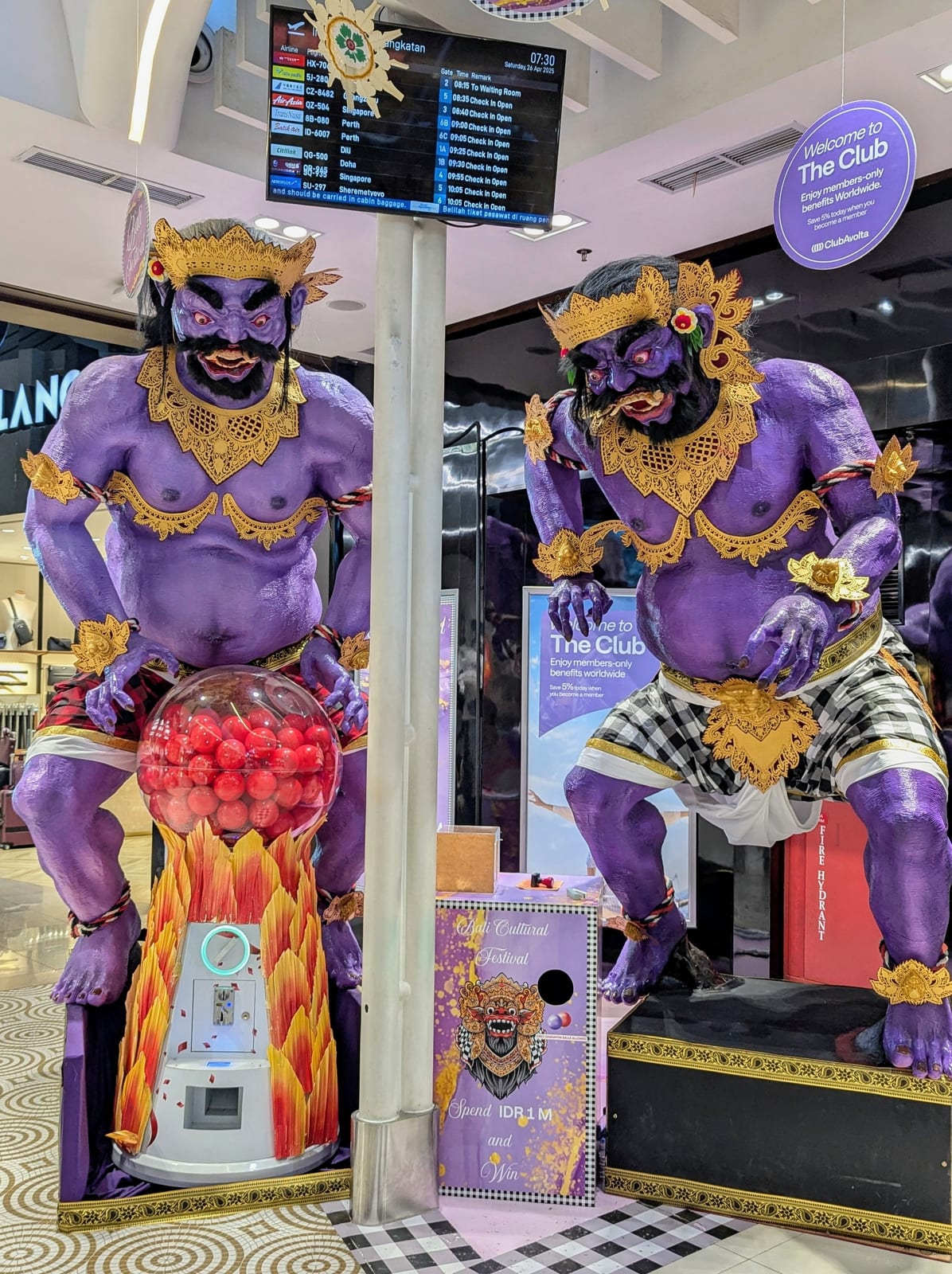
Day 6 — Fly to Bali via Kuala Lumpur. Miri to Kuala Lumpur to Denpasar is two AirAsia hops with a long layover between them — a second pass through Brickfields if you liked the food the first time. Land in Denpasar in the evening and stay near the airport rather than pushing into Ubud or the south coast, since tomorrow’s flight leaves early. Hilton Garden Inn Bali Ngurah Rai Airport is a genuine walk from the terminal.
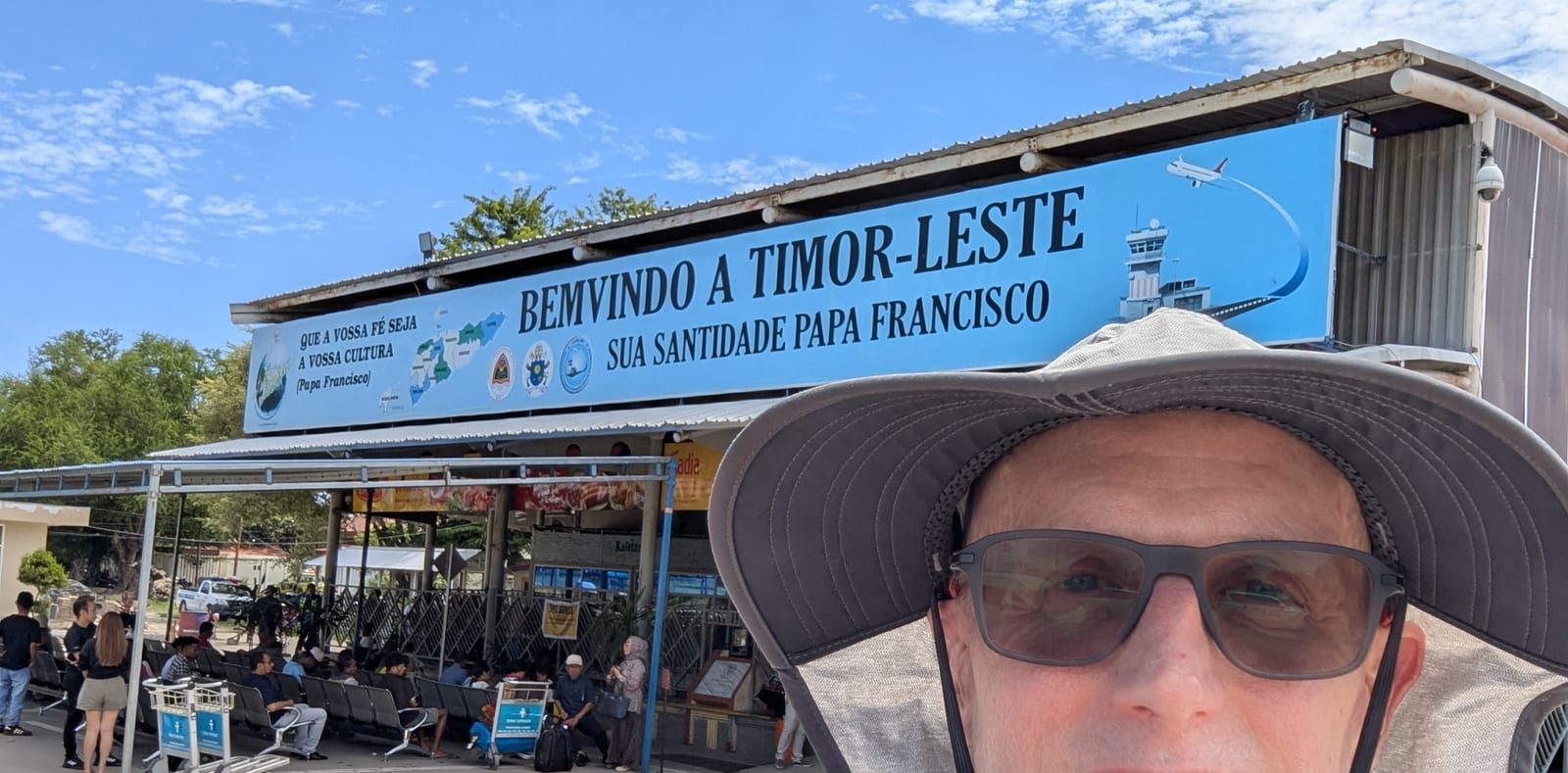
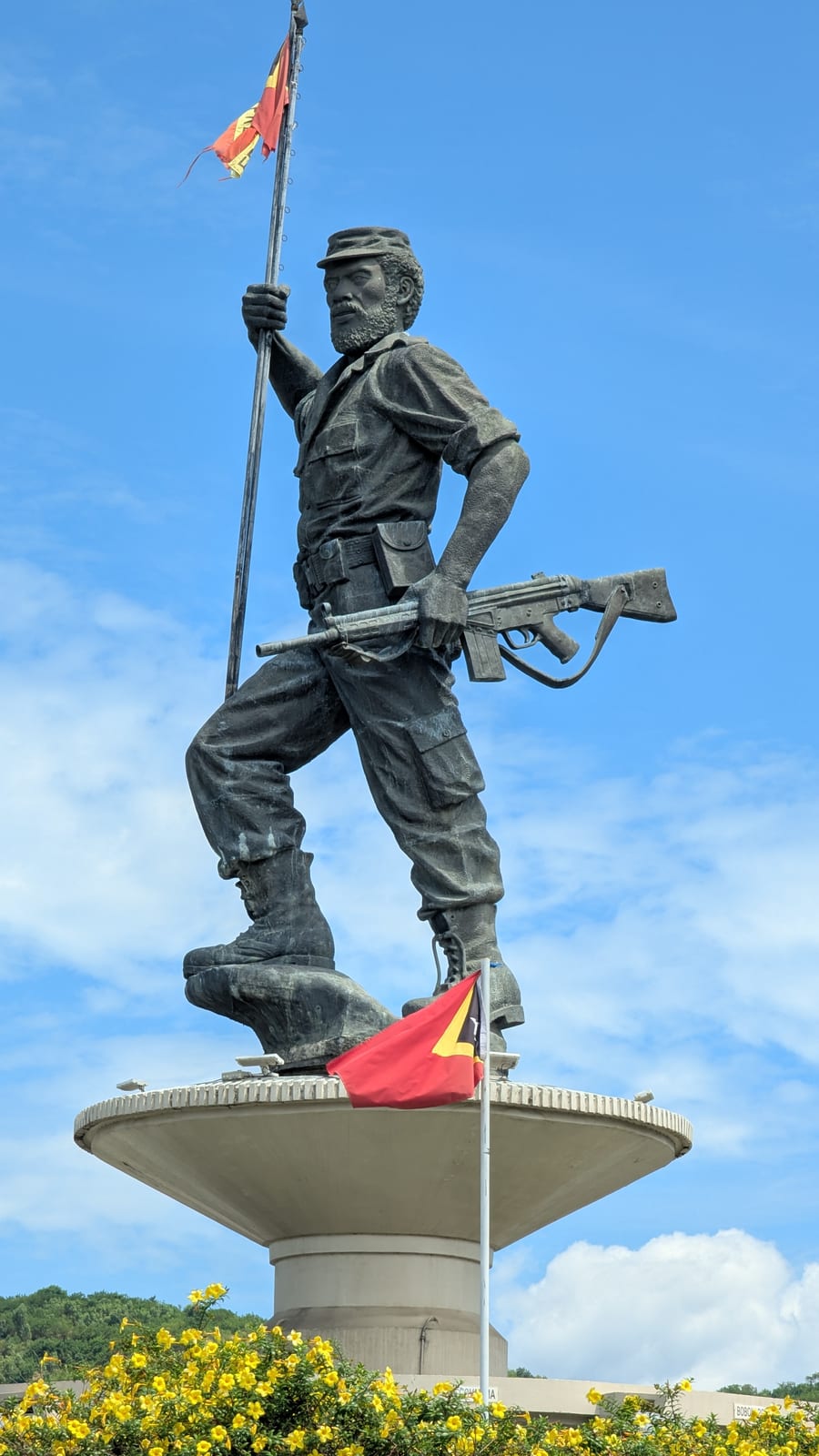
Day 7 — Fly to Dili, Timor-Leste. A short Citilink hop crosses into one of the world’s youngest countries, independent only since 2002 and still building its tourist infrastructure from close to zero. Timor-Leste runs on the US dollar, which simplifies the cash math, though ATMs are limited to a handful of banks in Dili — withdraw what you’ll need for the next few days before leaving the capital. Spend the afternoon along Dili’s waterfront and settle into a small guesthouse near Bebonuk Beach, a short bus or taxi ride from the airport.
Day 8 — Overland to Kupang, Indonesia. The trip’s second serious land-border day, and its least-documented: a public bus, reserved a day ahead by WhatsApp with the local operator, leaves Dili’s Timor Plaza before 7 AM and crosses the island’s interior to the border, where Timor-Leste ends and Indonesian West Timor begins — the same island split between two countries, one of only a handful of places like it in the world. The crossing itself is straightforward with Indonesia’s visa on arrival, but give the whole day to it; Dili to Kupang runs 10 to 12 hours depending on the border queue. Overnight at the Aston Kupang Hotel & Convention Center, a proper business hotel and a welcome shower after a long bus day.
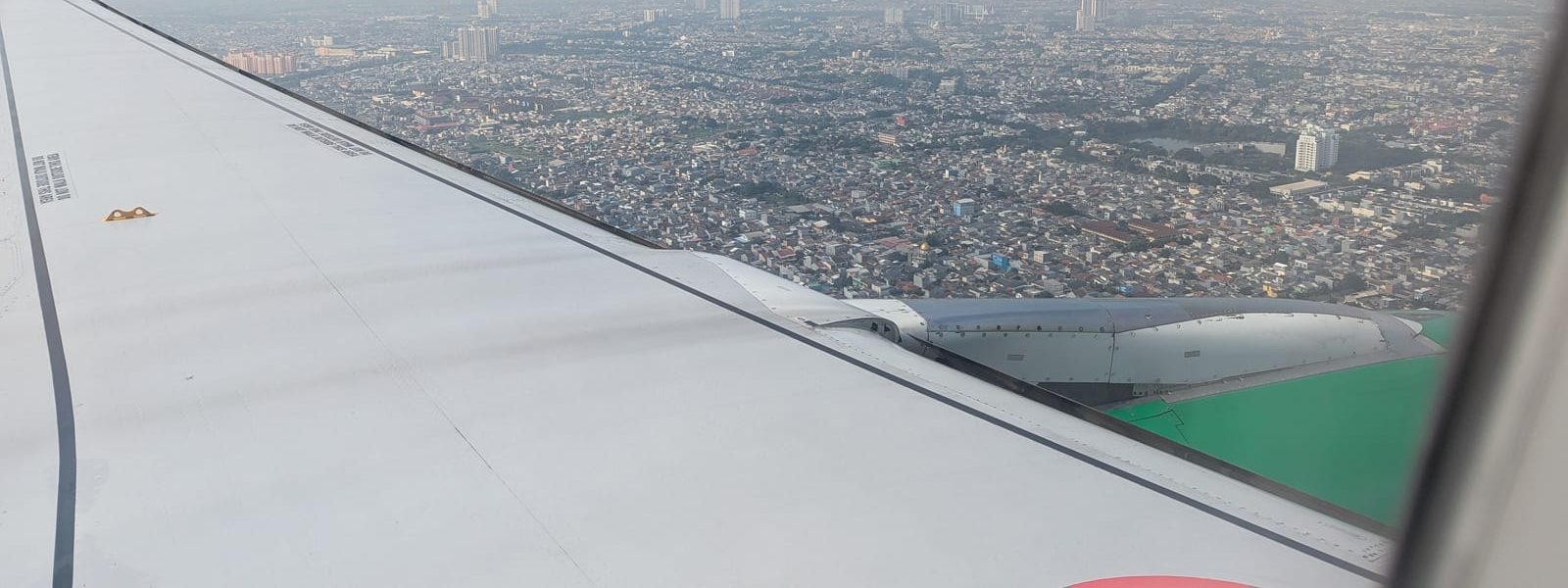
Day 9 — Fly to Jakarta. An early Citilink flight from Kupang crosses most of the Indonesian archipelago in a single hop. Jakarta rewards a light touch here: most travelers on this route are moving through, not lingering, and the traffic backs that up. Spend the afternoon at the National Monument (Monas) and, if you have the stamina after a border-crossing day, Taman Mini Indonesia Indah, a sprawling cultural park with a full-scale pavilion for each Indonesian province. Overnight at Konko Hostel Jakarta, well placed for tomorrow’s train.
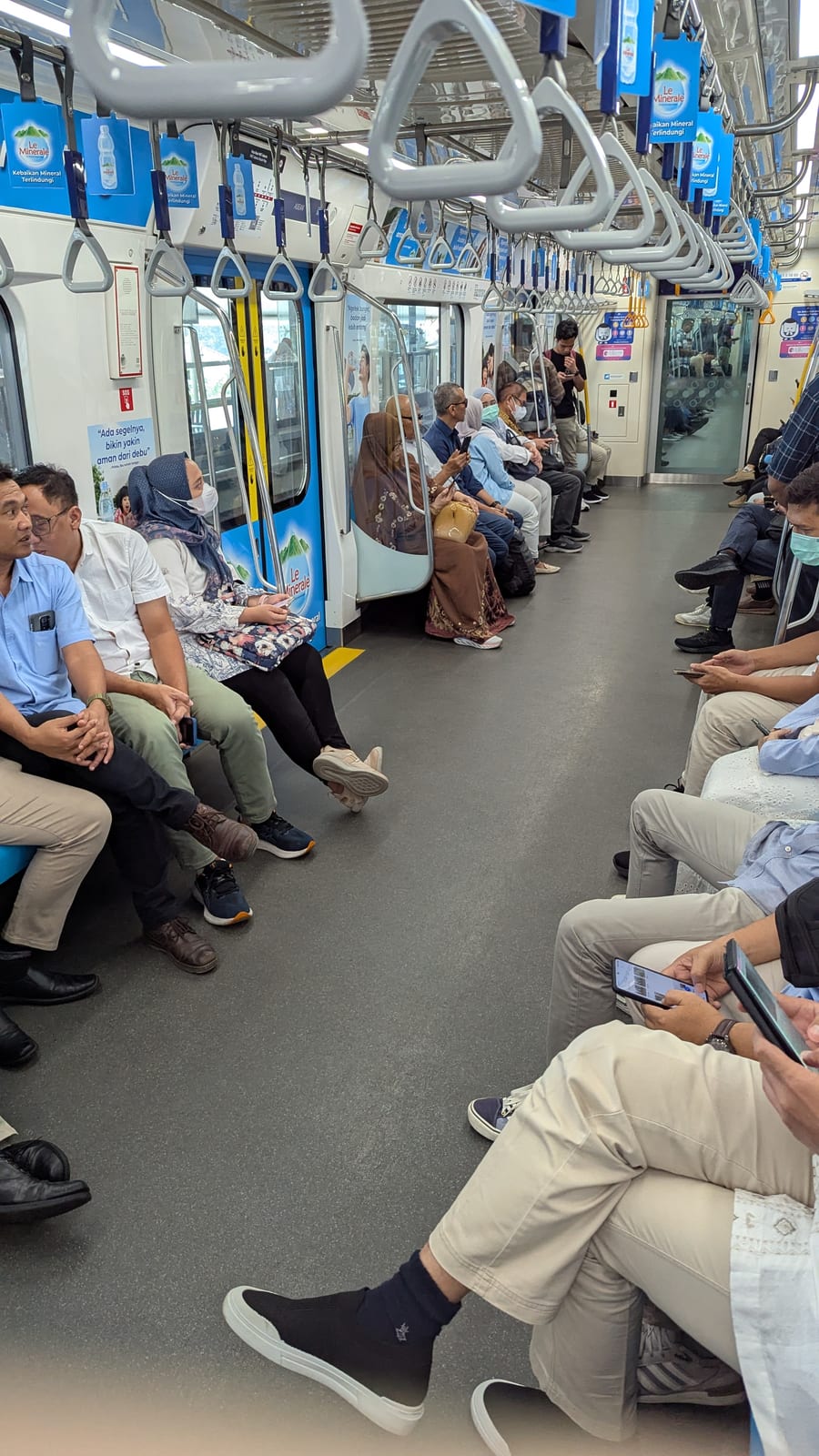
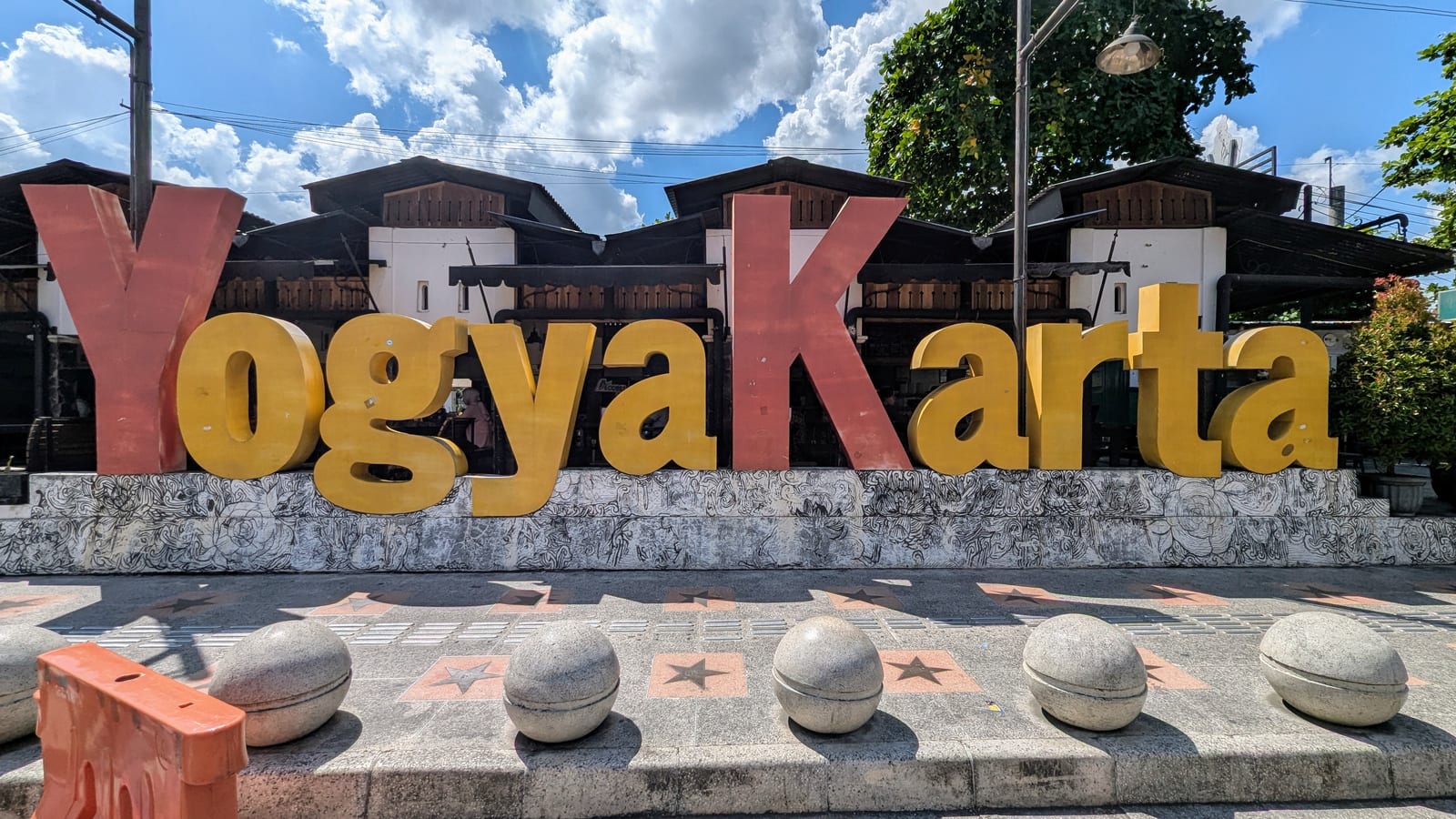
Day 10 — Train to Yogyakarta. Book the Argo Semeru’s executive class (reclining seats, air conditioning, power outlets) from Gambir station for the roughly six-and-a-half-hour run south to Yogyakarta, Java’s cultural capital. It’s a genuinely pleasant travel day — rice terraces and volcanoes out the window instead of another airport. Arrive early afternoon, check into Sleepy Raccoon Hostel, and spend the evening on Malioboro Street, Yogyakarta’s chaotic, likeable market strip.
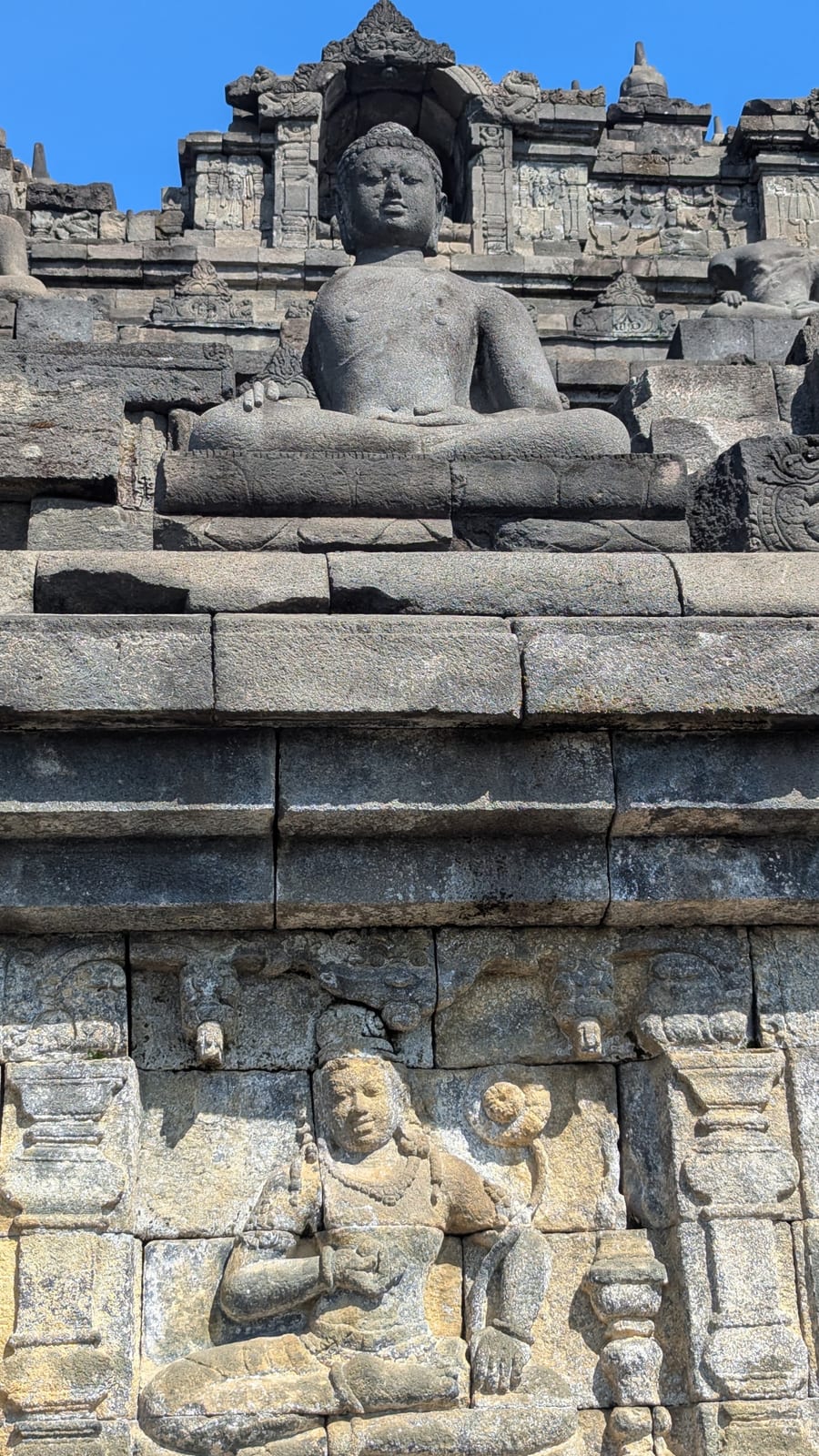
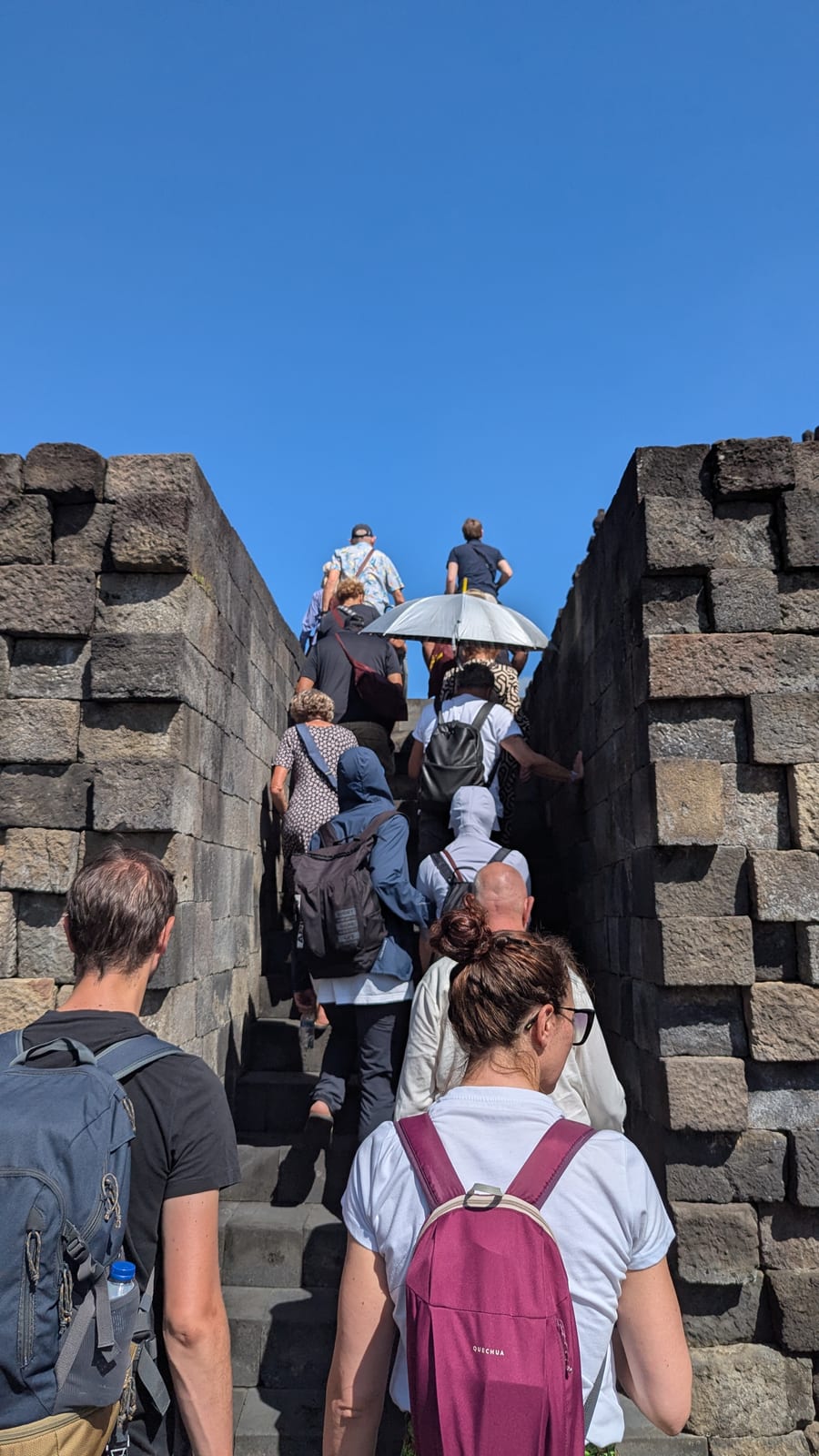
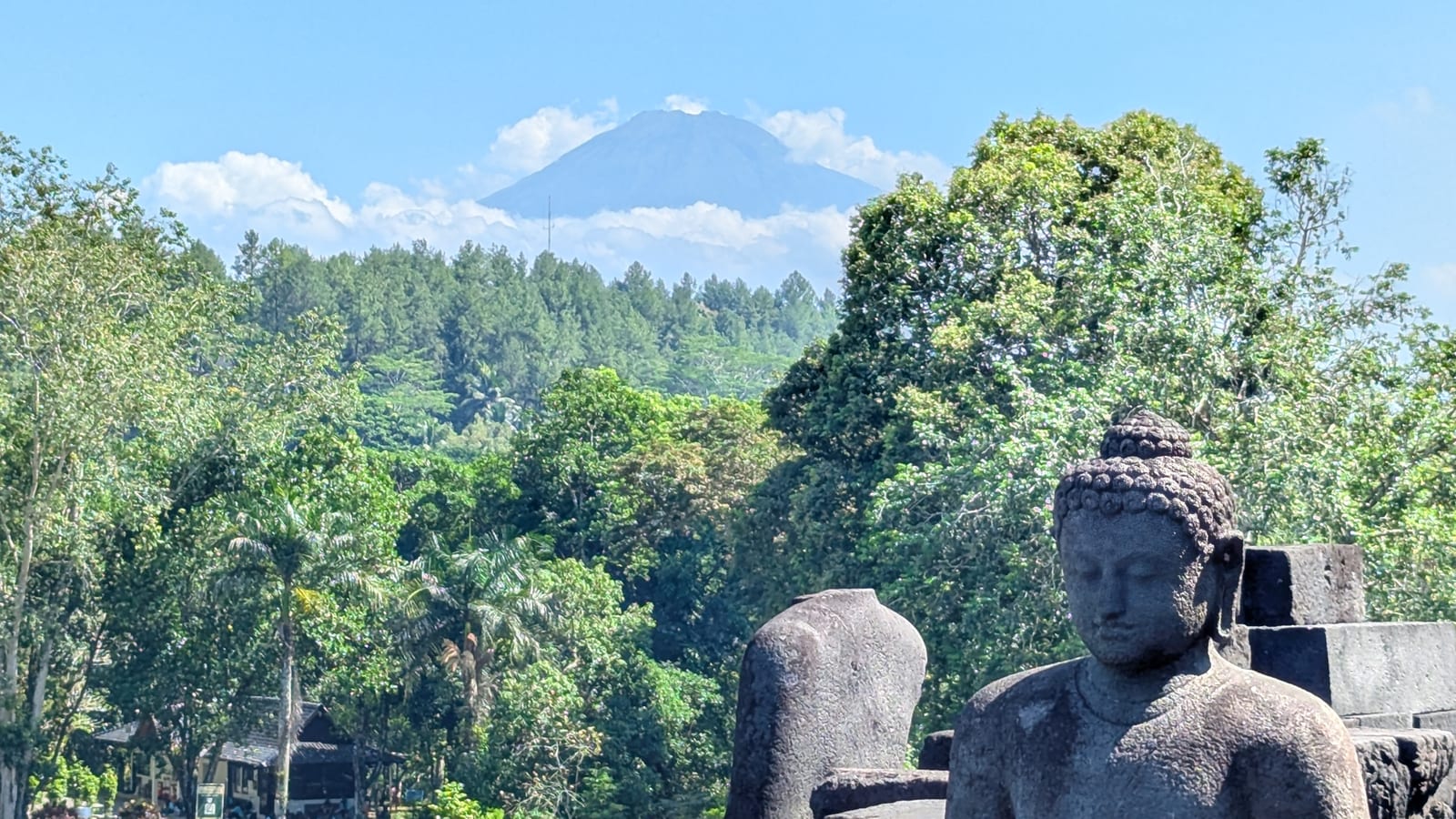
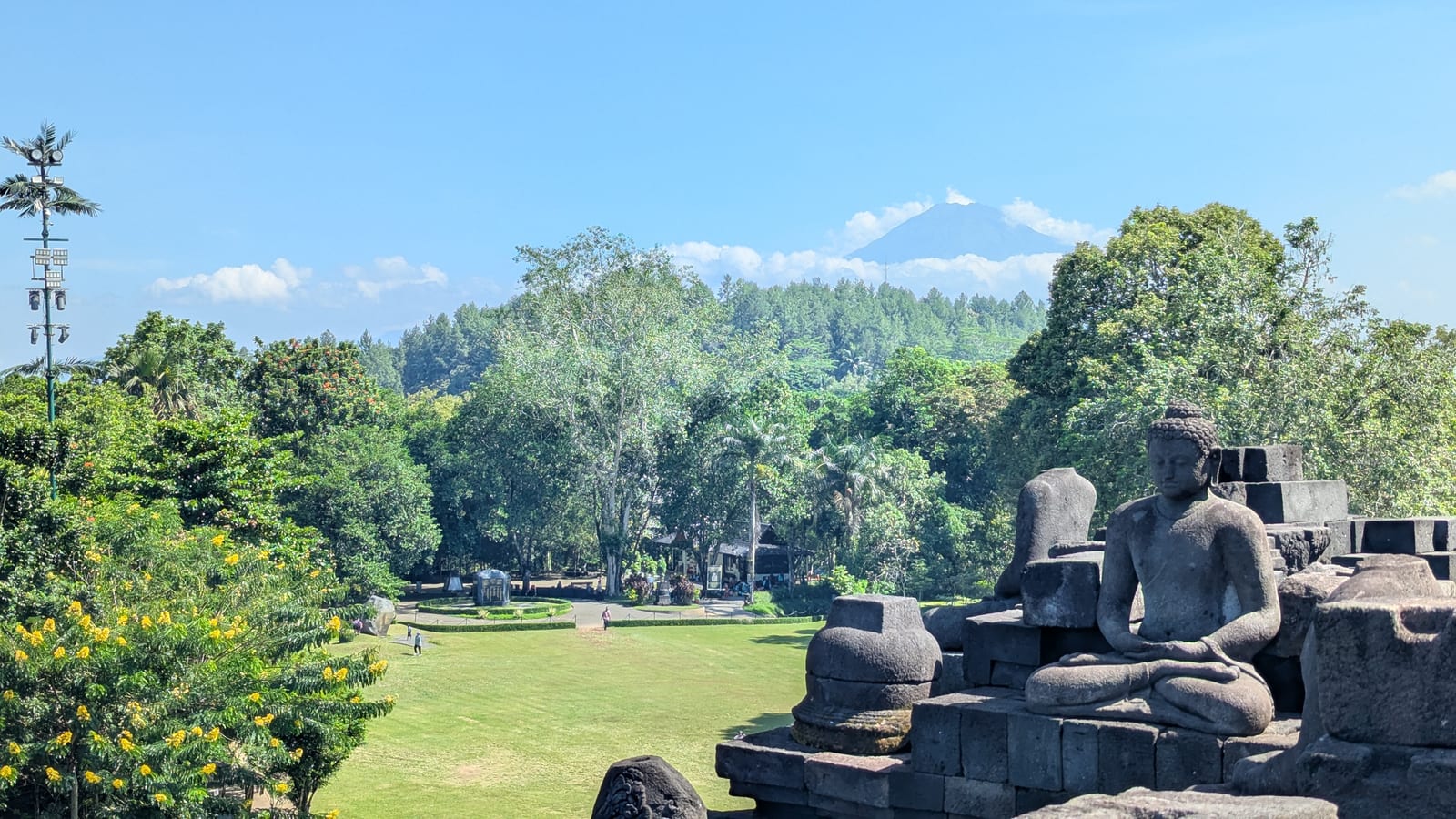
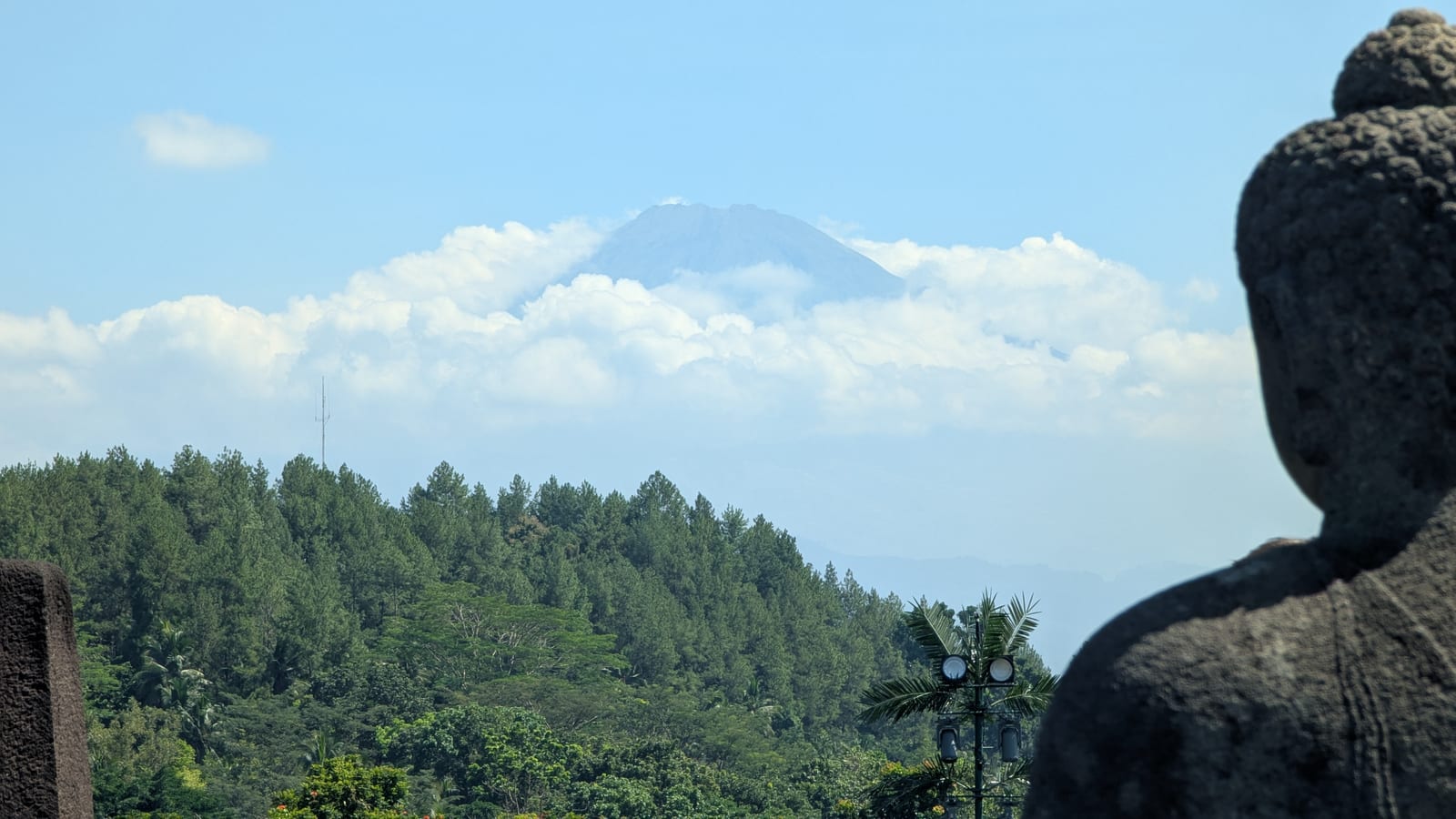
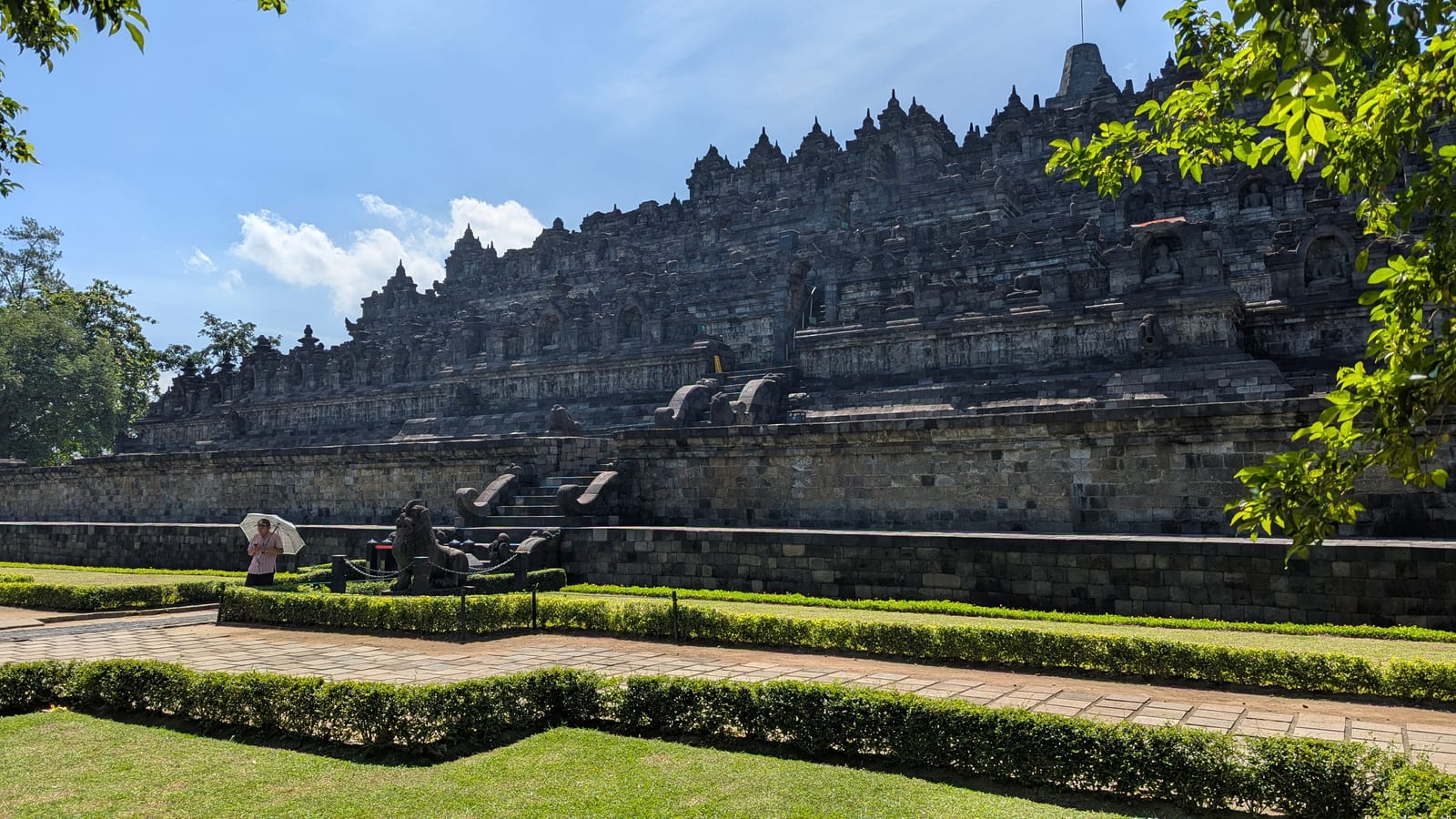
Day 11 — Borobudur. The largest Buddhist monument on earth, built in the 9th century and rediscovered under volcanic ash a thousand years later. Go as early as the ticket window allows — the site draws both foreign and domestic tour groups, and the light and the crowds both work in your favor before mid-morning. The climb through its nine stacked terraces to the central stupa, past 2,672 carved relief panels, is the best half-day on this entire route.
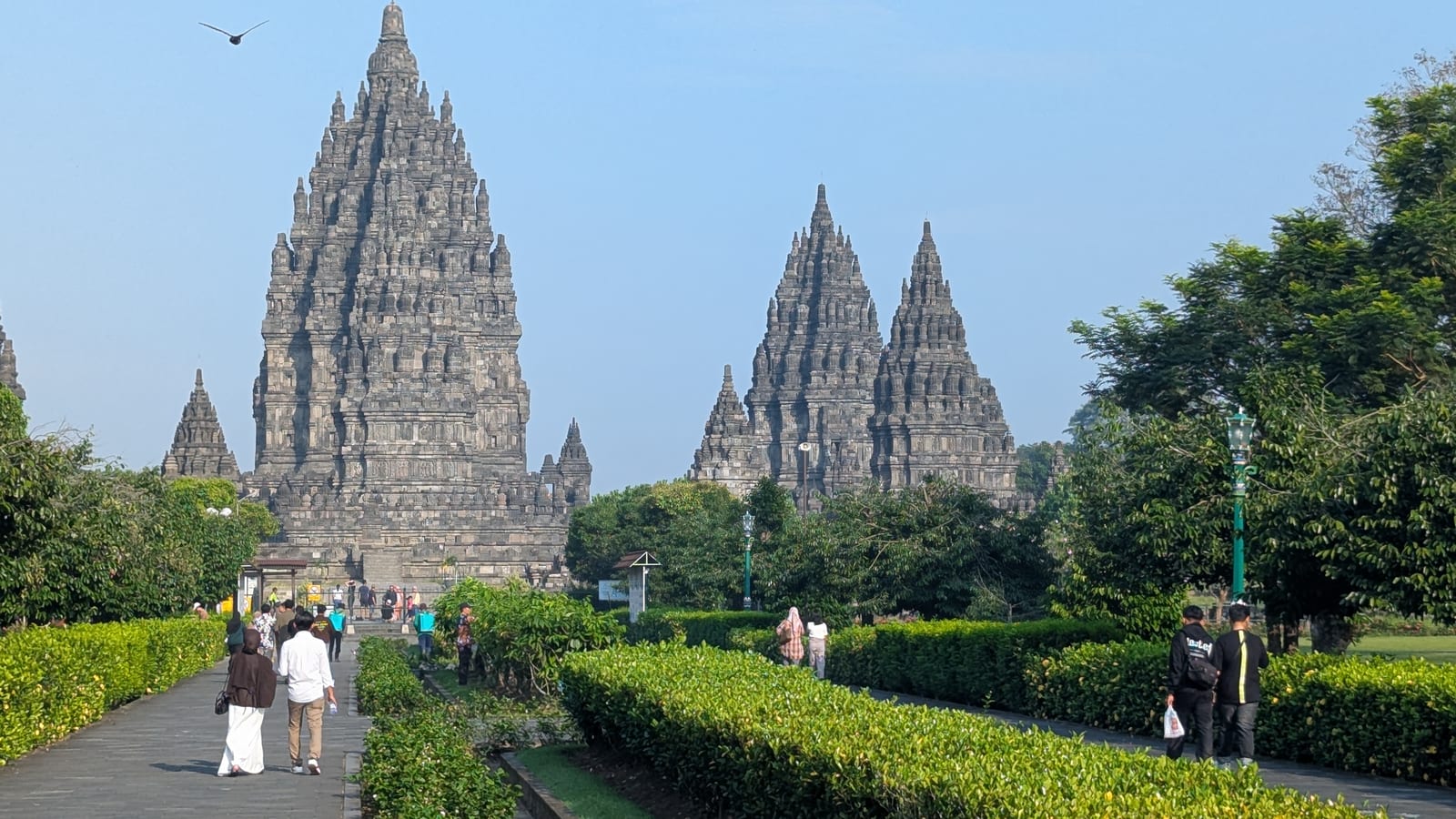
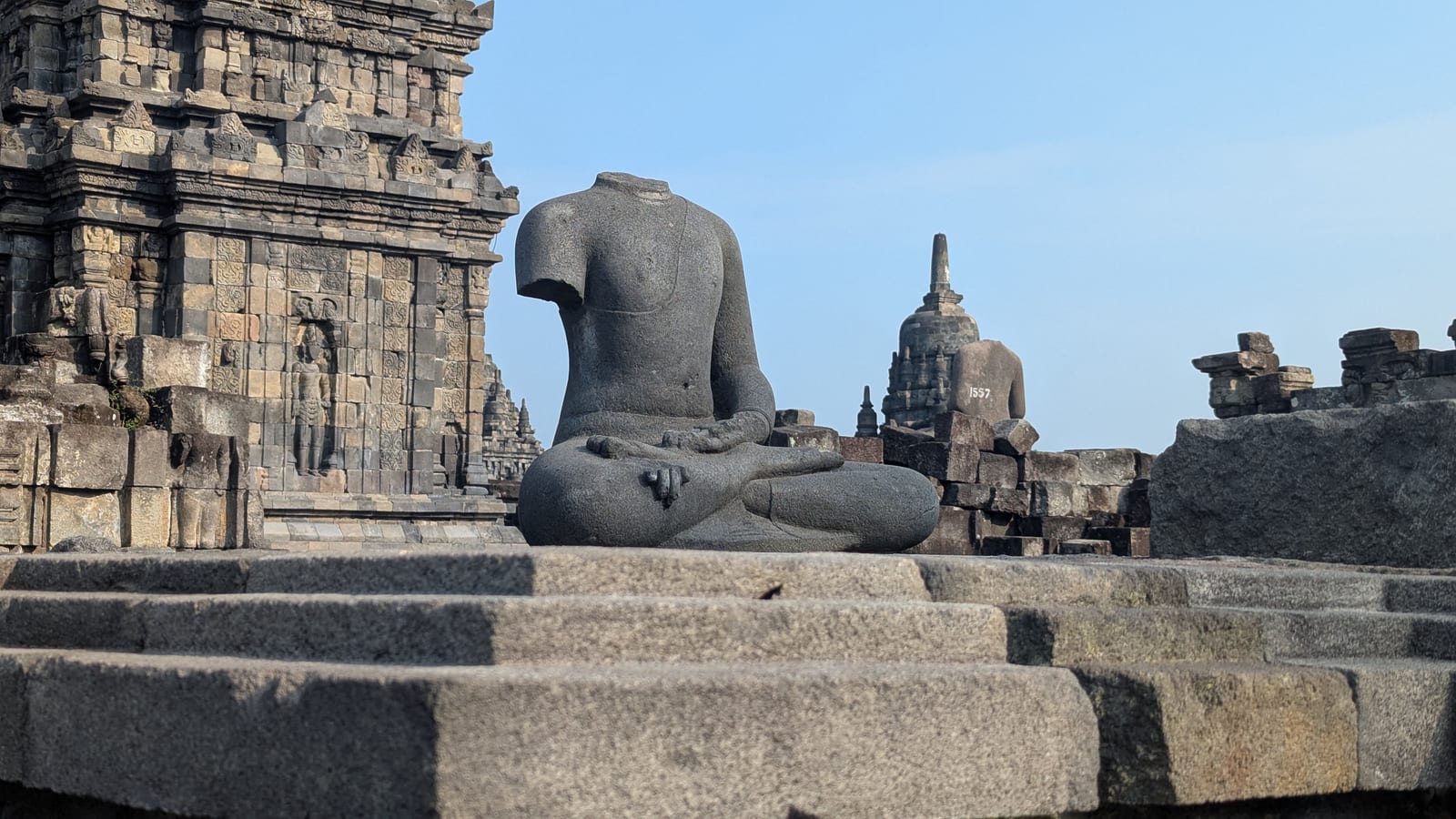
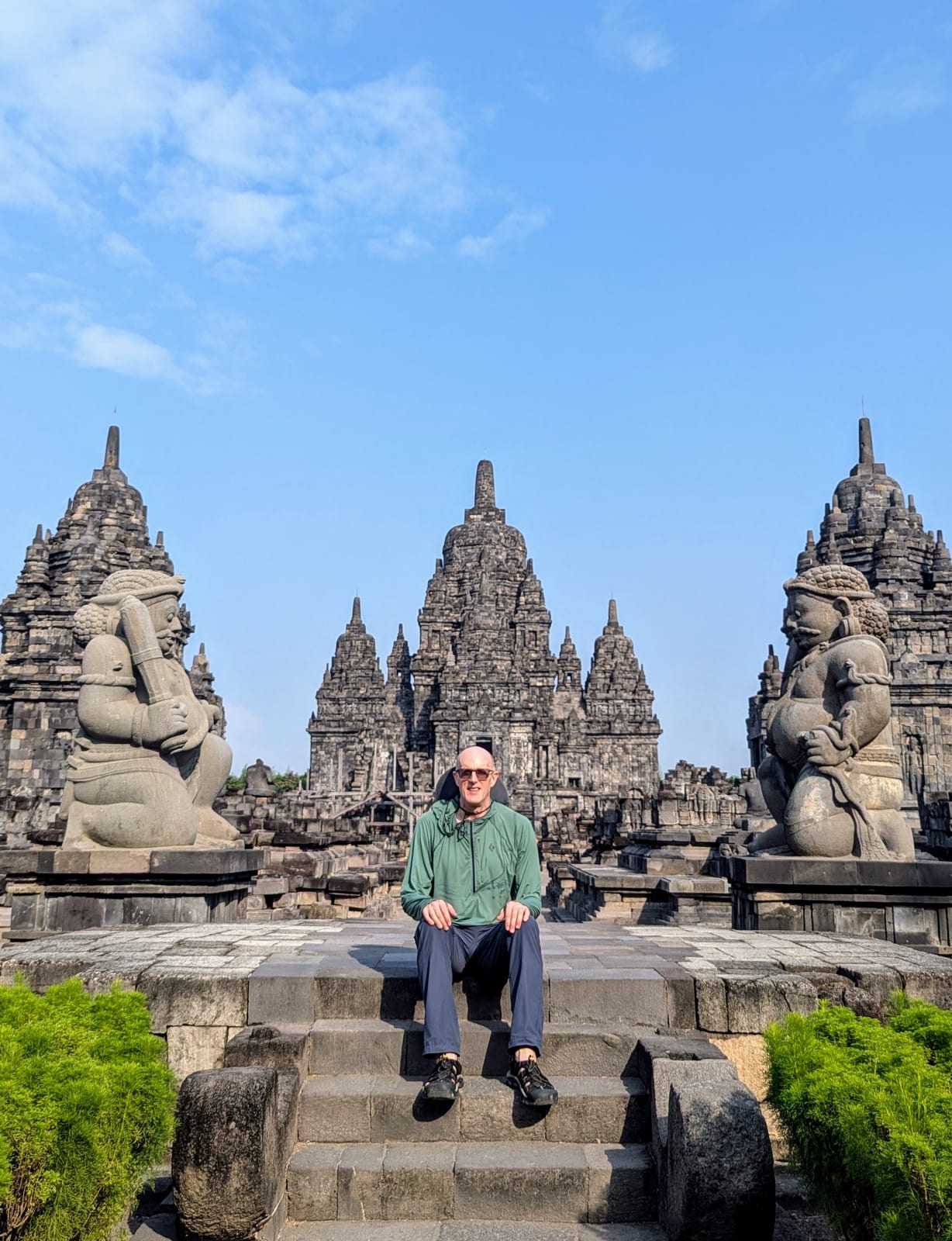
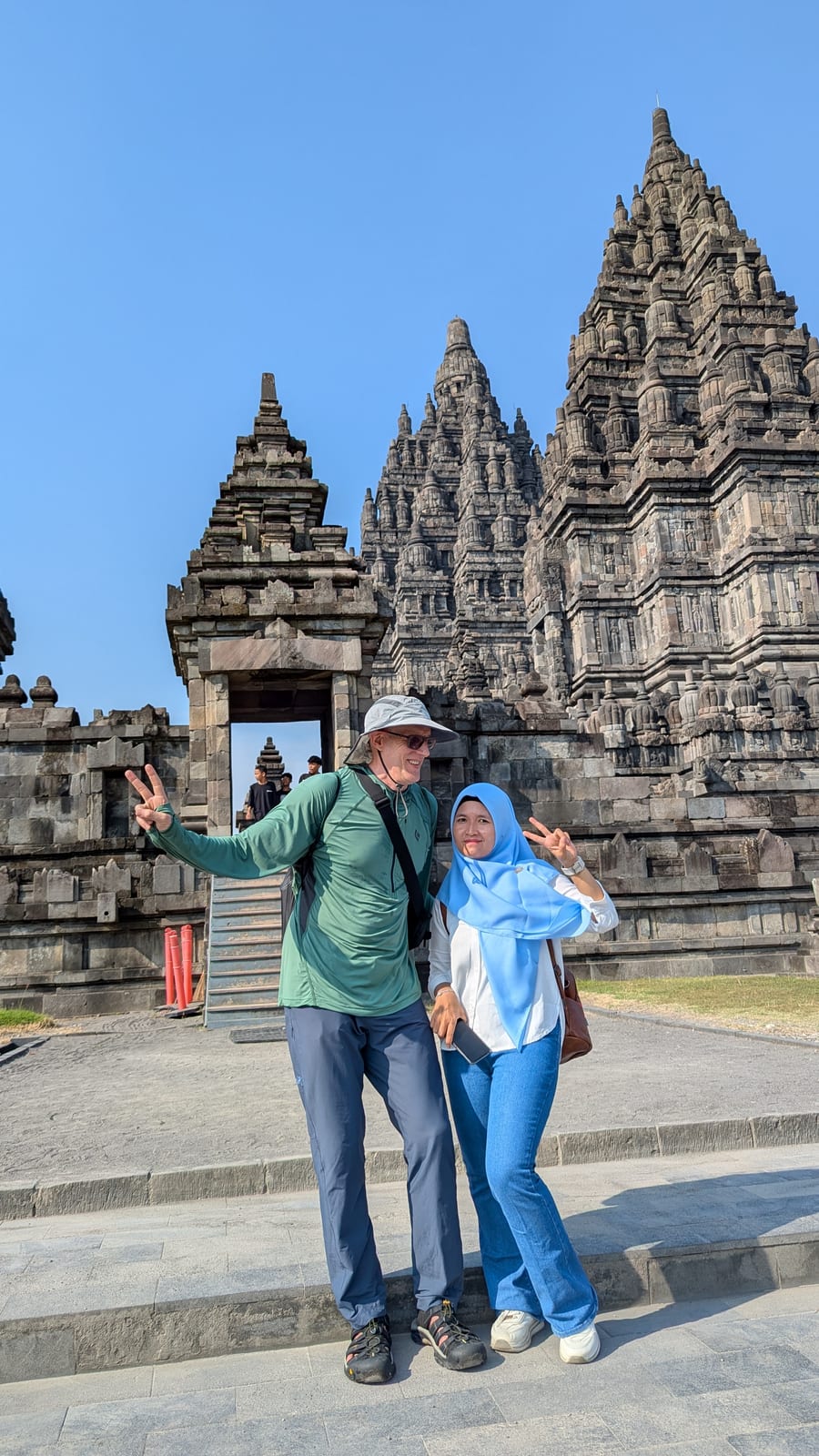
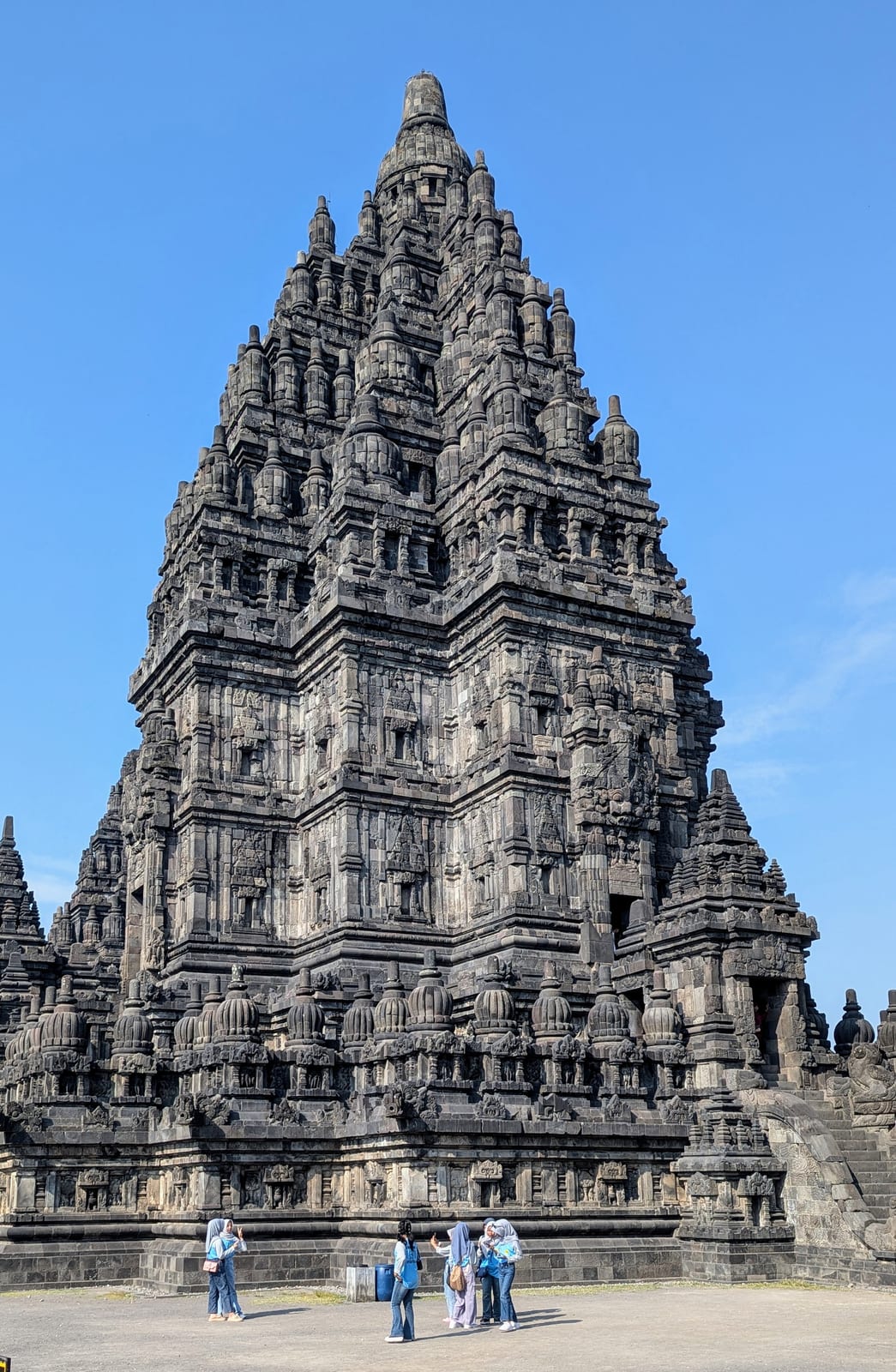
Day 12 — Prambanan. A 9th-century Hindu temple complex a short taxi or Grab ride from Yogyakarta, and the architectural counterpoint to Borobudur: soaring stone spires instead of a single mounded stupa, carved throughout with scenes from the Ramayana. Go for the structure in daylight, and if your evening allows it, the outdoor Ramayana Ballet performed with the floodlit temple as a backdrop is worth staying in town for.
Day 13 — Fly to Kuala Lumpur. Scoot’s Yogyakarta–Singapore–Kuala Lumpur routing (budget carrier, pay for checked bags) gets you most of the way home in one travel day. Land in KL in the evening and treat it as a soft landing before the long haul home: ibis Styles Kuala Lumpur Fraser Business Park is comfortable, unremarkable, and exactly what a final night before a long flight should be.
Day 14 — Home. Kuala Lumpur has some of the best long-haul connections in the region, typically routed home through the Gulf, Doha, or Tokyo. However you route it, you’re arriving home having crossed two land borders that almost no organized tour would attempt, through a country most Americans couldn’t find on a map.
Where we stayed
| Stop | Nights | Hotel |
|---|---|---|
| Dhigurah, Maldives | 1 | The Wave Dhigurah |
| Bandar Seri Begawan, Brunei | 2 | Capital Residence Suites |
| Miri, Malaysian Borneo | 1 | Emart Hotel (Riam), a simple budget hotel near the center |
| Denpasar, Bali | 1 | Hilton Garden Inn Bali Ngurah Rai Airport |
| Dili, Timor-Leste | 1 | DaTerra Hostel, near Bebonuk Beach |
| Kupang, West Timor | 1 | Aston Kupang Hotel & Convention Center |
| Jakarta | 1 | Konko Hostel Jakarta |
| Yogyakarta | 3 | Sleepy Raccoon Hostel |
| Kuala Lumpur | 1 | ibis Styles Kuala Lumpur Fraser Business Park |
Twelve hotel nights and two overnight flights account for the fourteen days. Book everything on free-cancellation rates a few weeks out, then reconfirm two or three days ahead as the border-crossing days firm up — Miri and Kupang in particular are worth locking down once you know your crossing is on schedule.
What it costs
Per person, based on my April 2025 run, adjusted for current flight pricing. The two land-border days keep this cheaper than the flight count alone would suggest.
| Item | Per person (USD) |
|---|---|
| Flights and inter-island transport within the loop (7 flights, 1 train, 1 speedboat) | $650–1,000 |
| Overland border transport (Brunei–Miri minibuses and taxi, Dili–Kupang bus) | $40–70 |
| Hotels, 12 nights | $450–650 |
| Visas and entry fees (Indonesia e-VOA, charged twice on this route; Timor-Leste visa on arrival) | $90–110 |
| Site tickets and excursions (Borobudur, Prambanan, Kampong Ayer water taxi, Maldives snorkel trip) | $90–140 |
| Food and drink | $350–490 |
| Total, excluding flights to Malé and home from Kuala Lumpur | $1,670–2,460 |
For comparison, escorted small-group tours rarely attempt this exact combination at all — Brunei and Timor-Leste barely register on most operators’ maps. The closest comparable “best of Southeast Asia plus the Maldives” itineraries run $4,500–6,500 per person for a similar two weeks, typically skip Brunei and Timor-Leste entirely, and never cross a land border on foot.
The cash playbook
Five currencies, more or less. Maldivian resorts and guesthouses widely accept US dollars alongside rufiyaa, so you can get by on USD there. Malaysia uses ringgit, with ATMs everywhere in Kuala Lumpur and Miri. Brunei uses the Brunei dollar, pegged 1:1 to the Singapore dollar, which is accepted interchangeably — but ATMs thin out fast outside Bandar Seri Begawan, so withdraw what you need for the border crossing before you leave the capital. Indonesia runs on rupiah, with reliable ATMs in Denpasar, Kupang, and Jakarta but sparser coverage in smaller towns. Timor-Leste is the simplest: it uses the US dollar as its official currency, though change frequently comes back in small-denomination coins, so carry a stash of small USD bills before you fly in, since Dili’s ATMs are limited and unreliable.
Paperwork and health
US citizens: the Maldives issues a free 30-day visa on arrival. Malaysia and Brunei are both visa-free for up to 90 days. Indonesia issues a visa on arrival or e-VOA (around $35, valid 30 days, extendable once) — and because this route exits Indonesia into Timor-Leste and re-enters at Kupang, budget for that fee twice, not once. Timor-Leste issues a visa on arrival for around $30. All of these are subject to change; check each country’s current requirements 60 to 90 days before departure, particularly Indonesia’s, which shifts its entry rules periodically.
Travel insurance with medical evacuation coverage matters more on this route than on most: Timor-Leste’s medical facilities are limited, and a serious case there typically means evacuation to Darwin, Australia or Singapore. Check CDC destination guidance for all five countries — recommendations differ by stop, and West Timor and Timor-Leste both warrant a look at mosquito-borne disease precautions alongside the standard food and water advice that applies everywhere on this route.
Honest notes and what to skip
This is the densest plan on this site, and I’d think twice before recommending it as anyone’s first solo international loop. If you want to cut something, cut a night from Yogyakarta’s three (two is workable) before you cut anything from the border-crossing days, which need the slack they’re given. Keep Jakarta to one afternoon and evening, not more — nearly everyone who has spent real time in Indonesia says the same thing, and the traffic backs it up. If the Brunei–Malaysia border walk sounds like more than you want, you can fly Bandar Seri Begawan back through Kuala Lumpur instead of overlanding to Miri, but you lose the signature story of this whole route and the only look at Malaysian Borneo it offers. And don’t book a same-day onward flight right after either border-crossing day — both run on island time, and the buffer you build in is the buffer that keeps a good trip from turning into a bad travel story.
Questions about this route? Reply to any issue of the newsletter and I will answer personally. New trip plans land in subscribers’ inboxes first. [Subscribe free →]